Where is Ai Weiwei?
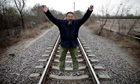
Detained for over a month by Beijing police, fears are growing for the safety of the Chinese artist. As two exhibitions of his work open in the UK, Adrian Searle reports It is, as I write, 37 days since Ai Weiwei disappeared, arrested by the Chinese police on 3 April in Beijing as he was about to board a scheduled flight for Hong Kong. He has not been seen or heard from since. He has not had access to a lawyer (Ai’s own lawyer disappeared for five days following the artist’s arrest), and despite persistent enquiries his family do not know where he is. Another question. Who is Ai Weiwei? As well as an artist, Ai is an architect, designer, activist, iconoclast, blogger, sometime antiques dealer and expert blackjack player. If the Chinese authorities who have arrested him and engineered his disappearance are right, this creative, complicated man is also a bigamist, involved in tax fraud, the distribution of pornography, and – laughably – a plagiarist. There is no currently no news on Ai’s condition, only rumour, including an unconfirmed and appalling graphic report , by a disaffected Xinhua journalist writing under a pseudonym, that Ai has been tortured, and has begun to confess to his supposed crimes. Meanwhile, his art has been shipped abroad, to London and New York and Switzerland. Two exhibitions of his work open in London this week. Twelve zodiac animal heads will be unveiled in the Somerset House courtyard tomorrow; these are oversized bronze replicas of figures originally sculpted by the Italian Jesuit artist Giuseppe Castiglione (1688-1766) as a water clock for the gardens of the Yuanmingyuan, Qing dynasty Emperor Qianlong’s summer retreat. In 1860, the palace was ransacked by French and British troops, and the heads were pillaged. Two ended up in the collection of Yves Saint Laurent; the current Chinese government has been trying to retrieve them. What goes around comes around. A second show of Ai’s sculptures and videos opens on Thursday at the Lisson

 Posted by
on May 9, 2011. Filed under News, Politics, World News.
You can follow any responses to this entry through the RSS 2.0.
You can skip to the end and leave a response. Pinging is currently not allowed.
Posted by
on May 9, 2011. Filed under News, Politics, World News.
You can follow any responses to this entry through the RSS 2.0.
You can skip to the end and leave a response. Pinging is currently not allowed.