Syria, Libya, Yemen and Middle East unrest – live updates
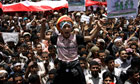
• Syrian regime deploys tanks to crush Friday prayer protests • Bashar al-Assad expected to be sanctioned by EU • Father of missing AJ journalist Dorothy Parvaz speaks out • North African migrant row prompts changes to EU travel 12.15pm: In the second of Peter Walker’s interviews he talked to Mokhtar Yahyaoui, a judge who was removed from his post in 2001 for complaining about political interference. Yahyaoui is now involved in setting up a new judicial system in Tunisia. The system was completely manipulated by the Ben Ali regime. I complained about this in a letter which got a lot of publicity abroad, and was a blow to the regime. I was disciplined and lost my job, I was banned from leaving the country and put under house arrest. After Ben Ali’s removal I was reinstated. Now I want to work in a democratic system with freedom of expression. Perhaps the most difficult thing in this period of transition for the government is judicial reform. For me, it’s the most important thing for the revolution. Justice is at the centre of everything. We’re not building a system out of nothing. We have more than 2,000 judges, the majority of whom are very good. We have a lot of experience. The big problem was interference from the Ben Ali regime. There was no separation between executive powers and judicial powers. It’s vital for reforms that the new system inspires new confidence in justice. Earlier, my colleague Martin Hodgson heard Yahyaoui speak about the situation in neighbouring Libya: Tunisia has already received 300,000 refugees from Libya, when we are still witnessing the aftermath of the revolution and the country is still not stable. They need every form of support and we attempted to do that and we didn’t complain, so I feel personally surprised when I hear in Western Europe the idea that 20,000 refugees will cause problems for Europe. I would compare the example of supporting the rebels in Libya with supporting the (Afghan) mujahideen against the USSR. You are in the process of making another Afghanistan. The situation is heading towards a failed state. Libya will need many years to recover from the situation it’s witnessing now. 12.09pm: My colleague Peter Walker has been interviewing two senior figures from post-Ben Ali Tunisia. They came into the Guardian this morning while in London for a series of meetings, including with the Foreign Office. He says they had some fascinating insights into how Tunisia, in many ways, is now facing perhaps the hardest part of the reform process – setting up a new political and judicial system once a long-serving despot has been deposed. First, Hammadi Jebali, secretary general of Ennahda , the previously-outlawed moderate Islamist party whose leader, Sheikh Rachid Ghannouchi, returned in January after 22 years in exile. Speaking through a translator, he said: The mood of the people has completely changed because they have succeeded in their revolution, after a long period, half a century, of oppression. The people are in control of their fate. Ben Ali the oppressor has fled the country, although the systemic structure of dictatorship is still trying to react. We have a multi-party system now in place, and the banned political parties have been legitimised, including Ennahda. This is the most important thing that has changed, but we have a huge task ahead. The people want the revolution to keep going because they want to see tangible reforms, not just mirages. (But) what is interesting in Tunisia is that the young people are highly educated and they understand the complexity of the task. When they see tangible results and there is a legitimate, democratic government in place, and have reforms have started then will be patient. They know there is no magic solution. We also need quick economic change, but speedy democratic reform is a prerequisite for any meaningful economic and social reform. In Tunisia we’re not interested in slogans about something being secular or non-secular. We are interested in democracy, full stop, genuine democracy, based on all freedoms – freedom of faith, non faith, intellectual freedom. It’s not the job of a government to impose ideas on people or to impose faith on people. It’s up to them. It’s a government which is based on freedoms and rights, including the rights of women and equal justice for men and women – rights in jobs, political rights, the right to wear a hijab or not to wear a hijab. This reinforces and reinvigorates civil society, and a democratic state must have a vibrant and free civil society. 12.07pm: Damascus based lawyer Razan Zeitouneh has troubling update: Breaking: Homs: shooting is heard in Al-Ashira neighborhood in Al-Sitteen street. #Syria #fb 11.57am: There are new protests in the southern villages around Deraa, Gaseem, central Damascus, and the Damascus suburbs, reports Wissam Tarif founder of the human rights group Insan. Tarif is receiving regular updates from contacts inside Syria. In an Audioboo interview he said: It is extraordinary. It is courageous. Young people want to live with dignity and to live with freedom. The crackdown has proven for the last three weeks that is not effective. There are lots of people who want to go out and protest. The crackdown has failed to achieve its main purpose which is to make people scared. Now they have to answer the question what next? _ 11.24am: The first reports of protests after Friday prayers in Syria are beginning to come in from credible sources on Twitter @wissamtarif (founder of the human rights group Insan) Demos in #AienArab #Amouda #Derbasieh #Qamishli #Amouda Chanting “people want to topple the regime” #Syria More than 3500 protesters are now in the streets of #Amouda #Syria @Razaniyat (human rights lawyer Razan Zeitouneh) 3000 Syrian Kurds protest now in Qamishli and chanting “people want to topple the regime” and “leave [Bashar], you traitor!” #Syria #fb 11.11am: Tens of thousands of people have gathered again in Cairo’s Tahrir Square . The rally is being held as a show of religious unity after Muslim-Christian clashes left 12 last weekend . Al-Jazeera showed live footage of a large peaceful gathering in the square. It says the demonstration is also a show of support for the Palestinian unity deal between Fatah and Hamas. 10.53am: Up to 850 people have been killed since the violent crackdown in Syria began , the UN now concedes. Rupert Colville, spokesman of the UN High Commissioner for Human Rights, said: “We believe the numbers are quite likely to be genuine.” Speaking a news conference he added: “We again call on the government to exercise restraint, to cease use of force and mass arrests to silence opponents.” The Syrian state news agency Sana claims 3,713 people have ” turned themselves in” for rioting. The regime is facing growing international condemnation for the crackdown notably from the US and the Turkish prime minister, Recep Tayyip Erdogan . Sana makes much of calls from both China and Russia for the international community to stay out of Syrian affairs. 10.30am: US secretary of state Hillary Clinton stepped up US rhetoric against the Assad regime claiming its crackdown was a sign of weakness . At a press conference on a trip to Greenland she said: Despite overwhelming international condemnation, the Syrian Government continues to exact brutal reprisals against its own citizens, including, tragically, the deaths of hundreds of Syrians since March. They engage in unlawful detention and torture and the denial of medical care to wounded persons. Now, there may be some who think that this is a sign of strength, but treating one’s own people in this way is, in fact, a sign of remarkable weakness. President Obama and I have condemned these actions in no uncertain terms, and I do so again today. The recent events in Syria make clear that the country cannot return to the way it was before. Tanks and bullets and clubs will not solve Syria’s political and economic challenges. And relying on Iran as your best friend and your only strategic ally is not a viable way forward. Syria’s future will only be secured by a government that reflects the popular will of all of the people and protects their welfare. President Assad faces increasing isolation, and we will continue to work with our international partners in the EU and elsewhere on additional steps to hold Syria responsible for its gross human rights abuses. 10.03am: A dissident Syrian opposition group predicts that the security forces will prevent mass protests today in Damascus, Deraa, Homs, and Banias, but that there will be significant demonstrations elsewhere. In a email briefing the group, who are coordinate this Facebook page , said these areas were under siege by the military. It said: For more than a week the Assad Regime is using mass arrests as a new strategy. Whole cities or part of towns get surrounded by security forces, power and phone lines get cut off, and secret police goes from house to house to arrest people. After being arrested, people get tortured and then released so that they can tell others about their horrible experiences. It is the same strategy Iran has used in the green revolution in 2009 to scare people and they think this way the protesters will stop demonstrating. We are expecting protests in all major cities as well in a big number of smaller towns. However we do not expect big protest in towns that are still under siege. 9.25am: Gaddafi, Assad or Saleh: who will go first? , asks the Guardian’s Middle East expert Brian Whitaker. Following the comparatively swift exits of Ben Ali in Tunisia and Mubarak in Egypt, we now have three Arab leaders who face serious challenges to their power but are proving more much difficult to dislodge: Gaddafi in Libya, Saleh in Yemen and Assad in Syria. Which of them, I wonder will be the next to go – and when? The Syrian uprising is the most recent – it began in the middle of March – and my gut feeling is that it will not succeed quickly. The Assad regime could easily survive into next year, if not for longer, though it is unlikely ever to recover from the blow to its authority. “The regime will dig in its heels and fight to the end,” Syria expert Joshua Landis writes on his blog. But he continues: “The Syrian opposition has successfully established a culture of resistance that is widespread in Syria and will not be eliminated. Even if demonstrations can be shut down for the time being, the opposition will not be defeated. Syria’s youth, long apolitical and apathetic, is now politicised, mobilised, and passionate. All the same, the opposition remains divided and leaderless, which presents great dangers for a post-Assad Syria.” In Yemen, where protests directed specifically against the president began during the second half of January, Saleh has been playing his usual wily game. He has already agreed to go, but he keeps finding reasons why he should stay a bit longer. Protected by his Republican Guard, he seems to have decided that street protests alone – even if millions take part in them – are not going to dislodge him. This has led to many predictions that the result will be armed conflict. But there is also a possibility that the economy will bring him down. The Chinese news agency, Xinhua, has a grim report today which quotes the Yemeni oil minister as saying economic collapse is “imminent”. The report says Yemen’s oil production “has been halved in recent weeks after producers pulled out their staff and halted output, which led to the closure of the country’s sole refinery in Aden”. The minister, Amir Salim al-Aydarus, blamed this mainly on “sabotage”, though he also acknowledged the role played by “political deadlock”. “The sabotage and destruction by outlaws on oil and gas pipelines as well as electricity lines exacerbated the economic situation,” Aydarus is reported as saying. “If the problem persists, the government will be unable to meet the minimum needs of the citizens. The situation will pose a catastrophe beyond imagination.” In Libya, where the rebellion began in mid-February, there has been much talk of a prolonged stalemate – though I’m sceptical about that. Judging by recent reports, the rebels are gradually consolidating their position while the Gaddafi regime is being slowly worn down by the Nato bombing and other factors. When the time comes, it could collapse quite suddenly. The course of events in Libya is now largely in the hands of outside forces, unlike Syria and, to a lesser extent, Yemen (where the GCC countries are involved diplomatically), and my reading of the situation is that western powers are in no great hurry to see Gaddafi go. After more than 40 years in power, another few months is neither here nor there, so it’s better to keep him pinned down in Tripoli until the rebels have properly got their act together and are capable of running the show. One way or another, all three regimes – in Libya, Yemen and Syria – are on the slide. In any of these countries, unforeseen events such as assassination or a coup could hasten their demise but as things stand at the moment it looks like a toss-up as to whether Saleh or Gaddafi will be the first to go. 9.15am: A Syrian member of the security forces says snipers were under orders to shoot protesters in the head in a suburb of Damascus . An English translation of the interview is published on the blog EA World View. Here’s a chilling extract: Each officer was to be accompanied by a volunteer sniper [usually a member of a militia or a mercenary]. They were also ordered to position themselves in places from which it would be easy to shoot. They were ordered to aim for the head as soon as they saw a protester. Their goal was to terrify people so they wouldn’t leave their houses. What most struck me after talking with several army officers was the authorities’ clear intention of pitting the army against protesters. Police live with their families, but army recruits live secluded in their barracks, where they are completely brainwashed by their superiors. They are told that the protesters are trouble-making rioters who are manipulated by foreign agents. Soldiers’ families need to warn them that the state is feeding them lies – otherwise their children will have too much blood on their hands. 8.53am: A source in Damascus reports: Troops in tanks have taken up positions in key towns in preparation for a day which is being seen as a decisive test of government’s claims to have the upper hand over pro-democracy protesters. Presidential adviser Buthaina Shaaban has told prominent opposition activists that security forces have been given strict orders not to fire on the crowds expected to gather after Friday prayers. But the prominent military presence on Syrian streets – and the regimes willingness to repeatedly use extreme violence in previous weeks – has led many to doubt such promises. Activists say fewer people may take to the streets today, but they say that unrest is still spreading. “When you send tanks against protesters and arrest thousands, sure, you’ll see fewer people out,” said Razan Zeitouneh, a lawyer and human rights activist in Damascus whose husband was arrested yesterday. “But looking at it the other way, it’s significant anyone is still coming out.” 8.25am: Welcome to our coverage of what could be another significant day in the unrest in the Middle East. The Syrian regime looks set to once again crush planned demonstrations after Friday prayers today. Syrian president Bashar al-Assad is reported to have ordered troops not to fire against protersters , but the claim is being treated with scepticism after weeks of a violent crackdown documented on numerous YouTube clips. Anti-government demonstrations are also planned in the Yemeni capital Sana’a today. At least people were killed yesterday after snipers fired on protesters in Sana’a. Here is a round-up of some of the other latest developments in the region: • European nations have moved to reverse decades of unfettered travel across the continent over fears of flood of immigrants fleeing the upheaval in north Africa. The policy shift was pushed by France and Italy, who have been feuding and panicking in recent weeks over a small influx of refugees from Tunisia. • The EU is expected to agree on personal sanctions against president Assad and other members of the Syrian regime over the continuing killing of protesters. The president’s name was not on a list of 13 official sanctioned by the EU, but a source told the Guardian that the list would soon expanded to include him. • The father of al-Jazeera journalist Dorothy Parvaz, who was deported to Iran by Syria, has spoken to the Guardian of his “grave concern” for his daughter’s safety. Fred Pravaz said: “We are in the dark. Syrian officials have made a statement that Dorothy was sent to Tehran on 1 May. We are a very close family so this really breaks my heart.” • Leading Yeneni activist Wasim Alqershi explains opposition to a Gulf states plan to allow president Saleh to stand down with impunity. Writing on Comment is Free he says: “Our young people have decided to escalate civil disobedience until Saleh’s regime is overthrown. It remains for the international community to realise that the youth will complete their revolution with or without international support.” • Muammar Gaddafi’s compound in Tripoli has been hit by Nato rockets again, a few hours after he appeared in public for the first time in almost two weeks. Gaddafi was shown on state television in a traditional brown robe addressing tribal leaders, whom he empowered to speak on behalf of a nation he has ruled with absolute power for almost 42 years. Arab and Middle East unrest Syria Bashar Al-Assad Libya Muammar Gaddafi Yemen Bahrain Middle East Protest Matthew Weaver guardian.co.uk

 Posted by
on May 13, 2011. Filed under News, Politics, World News.
You can follow any responses to this entry through the RSS 2.0.
You can skip to the end and leave a response. Pinging is currently not allowed.
Posted by
on May 13, 2011. Filed under News, Politics, World News.
You can follow any responses to this entry through the RSS 2.0.
You can skip to the end and leave a response. Pinging is currently not allowed.