Radiation fears after Japan hit by fresh blast
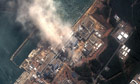
• New explosion at nuclear plant, fears of leak • Dangerous levels of radiation at Fukushima plant • Government reveals fire in No 4 reactor • Death toll estimated at 10,000 in one prefecture • Read the latest summary of today’s events • Read the Guardian’s latest news story on the explosion 4.40am: Here’s the latest wrap-up on Fukushima from the Kyodo news agency: The government’s Nuclear and Industrial Safety Agency said the explosion at the No 2 reactor may have damaged the ”suppression chamber,” a facility connected to the reactor’s container which is designed to cool down radiation steam and lower the pressure in the reactor. It said a sharp decline in the pressure level of the chamber suggests damage. Following the incident, the radiation level near the main gate of the Fukushima No. 1 plant exceeded the legal limit to reach 965.5 micro sievert per hour at 7:00 a.m. and jumped to 8,217 micro sievert at 8:31 a.m., the agency said. The latter amount is more than eight times the 1,000 micro sievert level to which people can safely be exposed in one year. Given that the building housing the reactor has already been damaged by Monday’s hydrogen blast at the neighboring No. 3 reactor, a spread of radiation outside the plant has become a serious threat, experts say. The possibility of a meltdown, in which fuel rods melt and are destroyed, ”cannot be ruled out” as the fuel rods have been damaged, the utility [Tepco] said. 4.31am: My colleague Matt Seaton hears a detail from the BBC’s World Service. 4.14am: The cumulative effects of the earthquake, tsunami and especially the potential nuclear disaster are weighing heavily on the Japanese economy, as would be expected. The Nikkei stock exchange in Tokyo has plunged by more than 12% today, well below the 9,000 level, while trading on the Topix exchange was suspended. The central bank is said to have injected $61bn in liquidity into the financial markets to ensure lending can continue in the worst areas during morning trading, followed by another $35bn later in the day (at least I think that’s right). So far the Nikkei index has lost nearly 20% since the start of the week. 4.02am: Kyodo reports: “Small amounts of radioactive substances detected in Tokyo”. It was from a Tokyo University monitoring post about five hours ago, some half an hour after the explosion in Fukushima. The amounts are still tiny and pose no hazard. Other monitoring posts in central Tokyo detected no changes in background radiation. 3.54am: It’s being reported on Twitter that Sky News, ITN, BBC and CNN are all moving reporters and camera crews away from the Fukushima plant, so don’t expect to see many pictures. 3.39am: The New York Times has a very pessimistic lead on its website right now , suggesting that a Chernobyl-style disaster is on the horizon – “Japan Faces Potential Nuclear Disaster as Radiation Levels Rise” is the headline: Japan’s nuclear crisis verged toward catastrophe on Tuesday, after an explosion at one crippled reactor damaged its crucial steel containment structure and a fire at another reactor spewed large amounts of radioactive material into the air, according to official statements and industry executives informed about the developments. It’s an excellent piece of reporting and well worth reading: The cascade of problems at Daiichi was initially difficult to interpret — with confusion compounded by incomplete and inconsistent information provided by government officials and executives of the plant’s operator, Tokyo Electric Power. But industry executives in close contact with officials in Japan said that the chain of events at Daiichi suggested that the authorities had come close to losing control of the situation, and that it would be difficult to maintain emergency seawater cooling operations at stricken reactors if a fire at a fourth reactor nearby was releasing large amounts of radioactive material — at least without threatening the health of emergency workers onsite. 3.24am: @peterdaou tweets: We can pretend climate change is a hoax, that BP’s spill vanished into thin air, but Japan’s nuclear disaster is a blistering wake-up call. 3.21am: This has now been confirmed by Japan’s nuclear safety agency which says that the fire at the No 4 reactor of the nuclear plant has been extinguished. 3.20am: Kyodo: “Fire at no 4 reactor apparently put out” – TEPCO 3.00am: From TimeOutTokyo, here is a list of the towns which need evacuating: Tamura-ku, Minami Souma Shi, Hirono Machi, Naraha-cho, Tomioka-cho, Ookuma-cho, Futaba-cho, Namie-cho, Katsurao-cho, Iidate Mura, Iwaki Shi (northeast area) 2.52am: To help put that all in context, here is the latest take from AP. (AP) Japan warned of an alarming radiation leak from a stricken nuclear power plant and told people nearby to stay indoors to avoid becoming sick in a rapidly escalating national crisis following last week’s earthquake and tsunami. In a nationally televised statement, Prime Minister Naoto Kan said radiation has spread from the three reactors of the Fukushima Dai-ichi nuclear plant in one of the hardest-hit provinces in Friday’s 9.0-magnitude earthquake and the ensuing tsunami. “The level seems very high, and there is still a very high risk of more radiation coming out,” Kan said. He warned there are dangers of more leaks and told people living within 19 miles (30 kilometers) of the Fukushima Dai-ichi complex to stay indoors to avoid radiation sickness. Chief Cabinet Secretary Yukio Edano said a fourth reactor at the complex was on fire and more radiation had been released. “Now we are talking about levels that can damage human health. These are readings taken near the area where we believe the releases are happening. Far away, the levels should be lower,” he said. 2.46am: Further information for residents from the expert on NHK. Those in the 20km- 30km zone should get inside, close windows and turn off airconditioning. If they have laundry outside they should leave it outside. If they have been outside they should dust off their hair and clothes before entering their building, including brushing off the soles of their shoes. 2.38am: An expert on NHK is now offering some explanation: “There is a lot of variation in the levels around the different reactors but the highest reading is at a level to harm human health. “We should stress these are the levels mentioned at the facility itself. The highest reading around one of the reactors is 400 milisieverts – the expert says miliSieverts are 1000 times greater than microSieverts. “A very grave situation is happening,” he says. “Even 100 milisieverts would be enough to cause infertility in exposed males; at 500 or more the lymphocytes in the blood will decrease. Clearly the 50 workers who remain will have protective gear. But without it, with that level of exposure, your health could be harmed in a very short time,” he says. The readings taken at 10.20 showed a level of 100 miliSieverts around the unit 4 reactor and 400 around unit 3. 2.25am: More from the question and answer session with Edano: The number 2 reactor is not as stable as number 1 and 3 but the water injection is working “to a certain level” he says. They believe the increases in radiation readings are due to the unit 4 fire, not the problems at unit 2. A bit more on the fire at unit 4: he says that spent fuel will not catch fire, but that they need to extinguish the fire because rising temperatures could cause the release of radioactive material. Asked about people living further away, he says a “minimal amount” of radioactive material could spread to far areas. But he said that would not be at levels that could harm human health. “We want you to keep calm. We can continue with our daily lives,” he said. The press conference has ended now. 2.22am: To clarify, the advice to stay indoors is for those within a 30km radius. 2.15am: As of 10.20am (Japanese time), they have taken readings which indicate levels of radiation that could impact human health. Edano has asked them to “embrace the information calmly”. “The readings were taken near the area where we believe the release of radioactive substances is taking place. The further away you are, the more values should go down.” He says beyond the 20km radius the level should be reduced to one where harm to human health would be minimal or non-existent. But he says that spread will of course depend on wind speeds and direction. He asks people to remain indoors so they are not exposed to any radiation that may come their way. He says he has received a report there is a “very high probability” some portion of the container vessel at the number 2 reactor was damaged. He is now responding to questions. 2.09am: Yukio Edano, the government’s chief spokesman, is now on. He’s saying there’s a fire in the number four unit. There are no fuel rods in there but it still contains spent fuel rods. (The unit was under renovation at the time of the quake and tsunami). He says there seems to have been a hydrogen explosion (as at units 1 and 3) in that unit too. There were not previously thought to be problems with unit 4. The translation is slightly confusing, but the gist seems to be they believe there is a leak of radioactive material from unit 4. More from Edano: The blast from Unit 2 followed the Unit 4 problems. There appears to be a release of steam from number two. This could be hydrogen he says. They are continuing to inject water at units 1 to 3 2.05am: Prime minister Naoto Kan has begun his address to the nation by asking people to listen to his message calmly. According to the translation by broadcaster NHK he warned: “Radiation has spread from these reactors and ‘the reading of the level seems high’. There’s still a very high risk of further radioactive material coming out.” He has asked anyone remaining in the 20km evacuation zone around the number 1 plant and the 10km zone around the number 2 plant to leave. Hundreds of thousands have already been evacuated. He a said workers were “putting themselves in a very dangerous situation” to try to contain the problems. He again requested people to remain calm. 1.55am: The Associated Press now has the latest on the death toll, which has risen to 2,414. (AP) Japanese police say the official death toll from last week’s massive earthquake and tsunami has risen to 2,414. Police said Tuesday that a big share of the deaths were in Miyagi prefecture, where 1,254 people are confirmed dead. The number of people officially missing is at 3,118. But regional officials said they believe that tens of thousands may have been swept away by the tsunami that devastated a long stretch of Japan’s northeastern coast Friday. You can read the Guardian’s latest news piece on the situation here. 1.46am: The nuclear situation in Japan is developing rapidly and we will bring you updates as they come through. A third explosion in four days has hit a struggling nuclear plant in Japan’s stricken north east this morning. The plant’s operators said its reading had climbed to 8,217 microsieverts per hour – described by broadcaster NHK as equivalent to eight times the radiation a person would usually experience in a year. It later dropped sharply, the broadcaster said. The peak was still far below the level which would cause immediate damage to health. 1.37am: Here is a summary of some of the key developments over the last 24 hours in Japan: • A third explosion in four days rocked a crippled nuclear power plant in northeastern Japan on Tuesday morning as authorities struggled to avert a catastrophic release of radiation. The latest explosion at the Fukushima Dai-ichi happened in the plant’s Unit 2 near a suppression pool, which removes heat under a reactor vessel, according to the plant owner, Tokyo Electric Power Co. A government minister said it was “highly likely” that the fuel rods inside the reactor might melt. Radiation levels near the site have risen. • Tens of thousands are still unaccounted for as the official deathtoll reached 2,800, while bodies continue to be washed ashore four days after the tsunami triggered by the earthquake. Almost two million households remain without power in the north of Japan, where snow is forecast later this week, while around 1.4 million households have no running water. Those with power are being affected by rolling blackouts as electricity shortages force reductions in service in some areas. • The International Atomic Energy Agency says the Fukushima crisis is unlikely to become another Chernobyl. Authorities have set up a 20km (12 mile) exclusion zone around the Fukushima Daiichi plant. Meanwhile, the US agreed to Japan’s formal request for supplies and equipment to tackle the crisis. • Japanese stocks took a hammering when the Tokyo Stock Exchange opened on Tuesday and saw its benchmark Nikkei 225 decline to its lowest point since early October 2008. Efforts to limit the financial devastation wreaked by the earthquake, tsunami and nuclear power crisis continued with Japan’s central bank planning to inject $85bn billion into the economy to help the banking system to function as many businesses remain closed. Economists at Credit Suisse bank are calculating the effects of the disaster on the worst hit areas to cost around $171bn. Japan earthquake and tsunami Japan Nuclear power Natural disasters and extreme weather Tania Branigan Lee Glendinning Richard Adams guardian.co.uk
 Posted by
on March 14, 2011. Filed under News, Politics, World News.
You can follow any responses to this entry through the RSS 2.0.
You can skip to the end and leave a response. Pinging is currently not allowed.
Posted by
on March 14, 2011. Filed under News, Politics, World News.
You can follow any responses to this entry through the RSS 2.0.
You can skip to the end and leave a response. Pinging is currently not allowed.
Radiation fears after Japan hit by fresh blast
• New explosion at nuclear plant, fears of leak • Dangerous levels of radiation at Fukushima plant • Government reveals fire in No 4 reactor • Death toll estimated at 10,000 in one prefecture • Read the latest summary of today’s events • Read the Guardian’s latest news story on the explosion 4.40am: Here’s the latest wrap-up on Fukushima from the Kyodo news agency: The government’s Nuclear and Industrial Safety Agency said the explosion at the No 2 reactor may have damaged the ”suppression chamber,” a facility connected to the reactor’s container which is designed to cool down radiation steam and lower the pressure in the reactor. It said a sharp decline in the pressure level of the chamber suggests damage. Following the incident, the radiation level near the main gate of the Fukushima No. 1 plant exceeded the legal limit to reach 965.5 micro sievert per hour at 7:00 a.m. and jumped to 8,217 micro sievert at 8:31 a.m., the agency said. The latter amount is more than eight times the 1,000 micro sievert level to which people can safely be exposed in one year. Given that the building housing the reactor has already been damaged by Monday’s hydrogen blast at the neighboring No. 3 reactor, a spread of radiation outside the plant has become a serious threat, experts say. The possibility of a meltdown, in which fuel rods melt and are destroyed, ”cannot be ruled out” as the fuel rods have been damaged, the utility [Tepco] said. 4.31am: My colleague Matt Seaton hears a detail from the BBC’s World Service. 4.14am: The cumulative effects of the earthquake, tsunami and especially the potential nuclear disaster are weighing heavily on the Japanese economy, as would be expected. The Nikkei stock exchange in Tokyo has plunged by more than 12% today, well below the 9,000 level, while trading on the Topix exchange was suspended. The central bank is said to have injected $61bn in liquidity into the financial markets to ensure lending can continue in the worst areas during morning trading, followed by another $35bn later in the day (at least I think that’s right). So far the Nikkei index has lost nearly 20% since the start of the week. 4.02am: Kyodo reports: “Small amounts of radioactive substances detected in Tokyo”. It was from a Tokyo University monitoring post about five hours ago, some half an hour after the explosion in Fukushima. The amounts are still tiny and pose no hazard. Other monitoring posts in central Tokyo detected no changes in background radiation. 3.54am: It’s being reported on Twitter that Sky News, ITN, BBC and CNN are all moving reporters and camera crews away from the Fukushima plant, so don’t expect to see many pictures. 3.39am: The New York Times has a very pessimistic lead on its website right now , suggesting that a Chernobyl-style disaster is on the horizon – “Japan Faces Potential Nuclear Disaster as Radiation Levels Rise” is the headline: Japan’s nuclear crisis verged toward catastrophe on Tuesday, after an explosion at one crippled reactor damaged its crucial steel containment structure and a fire at another reactor spewed large amounts of radioactive material into the air, according to official statements and industry executives informed about the developments. It’s an excellent piece of reporting and well worth reading: The cascade of problems at Daiichi was initially difficult to interpret — with confusion compounded by incomplete and inconsistent information provided by government officials and executives of the plant’s operator, Tokyo Electric Power. But industry executives in close contact with officials in Japan said that the chain of events at Daiichi suggested that the authorities had come close to losing control of the situation, and that it would be difficult to maintain emergency seawater cooling operations at stricken reactors if a fire at a fourth reactor nearby was releasing large amounts of radioactive material — at least without threatening the health of emergency workers onsite. 3.24am: @peterdaou tweets: We can pretend climate change is a hoax, that BP’s spill vanished into thin air, but Japan’s nuclear disaster is a blistering wake-up call. 3.21am: This has now been confirmed by Japan’s nuclear safety agency which says that the fire at the No 4 reactor of the nuclear plant has been extinguished. 3.20am: Kyodo: “Fire at no 4 reactor apparently put out” – TEPCO 3.00am: From TimeOutTokyo, here is a list of the towns which need evacuating: Tamura-ku, Minami Souma Shi, Hirono Machi, Naraha-cho, Tomioka-cho, Ookuma-cho, Futaba-cho, Namie-cho, Katsurao-cho, Iidate Mura, Iwaki Shi (northeast area) 2.52am: To help put that all in context, here is the latest take from AP. (AP) Japan warned of an alarming radiation leak from a stricken nuclear power plant and told people nearby to stay indoors to avoid becoming sick in a rapidly escalating national crisis following last week’s earthquake and tsunami. In a nationally televised statement, Prime Minister Naoto Kan said radiation has spread from the three reactors of the Fukushima Dai-ichi nuclear plant in one of the hardest-hit provinces in Friday’s 9.0-magnitude earthquake and the ensuing tsunami. “The level seems very high, and there is still a very high risk of more radiation coming out,” Kan said. He warned there are dangers of more leaks and told people living within 19 miles (30 kilometers) of the Fukushima Dai-ichi complex to stay indoors to avoid radiation sickness. Chief Cabinet Secretary Yukio Edano said a fourth reactor at the complex was on fire and more radiation had been released. “Now we are talking about levels that can damage human health. These are readings taken near the area where we believe the releases are happening. Far away, the levels should be lower,” he said. 2.46am: Further information for residents from the expert on NHK. Those in the 20km- 30km zone should get inside, close windows and turn off airconditioning. If they have laundry outside they should leave it outside. If they have been outside they should dust off their hair and clothes before entering their building, including brushing off the soles of their shoes. 2.38am: An expert on NHK is now offering some explanation: “There is a lot of variation in the levels around the different reactors but the highest reading is at a level to harm human health. “We should stress these are the levels mentioned at the facility itself. The highest reading around one of the reactors is 400 milisieverts – the expert says miliSieverts are 1000 times greater than microSieverts. “A very grave situation is happening,” he says. “Even 100 milisieverts would be enough to cause infertility in exposed males; at 500 or more the lymphocytes in the blood will decrease. Clearly the 50 workers who remain will have protective gear. But without it, with that level of exposure, your health could be harmed in a very short time,” he says. The readings taken at 10.20 showed a level of 100 miliSieverts around the unit 4 reactor and 400 around unit 3. 2.25am: More from the question and answer session with Edano: The number 2 reactor is not as stable as number 1 and 3 but the water injection is working “to a certain level” he says. They believe the increases in radiation readings are due to the unit 4 fire, not the problems at unit 2. A bit more on the fire at unit 4: he says that spent fuel will not catch fire, but that they need to extinguish the fire because rising temperatures could cause the release of radioactive material. Asked about people living further away, he says a “minimal amount” of radioactive material could spread to far areas. But he said that would not be at levels that could harm human health. “We want you to keep calm. We can continue with our daily lives,” he said. The press conference has ended now. 2.22am: To clarify, the advice to stay indoors is for those within a 30km radius. 2.15am: As of 10.20am (Japanese time), they have taken readings which indicate levels of radiation that could impact human health. Edano has asked them to “embrace the information calmly”. “The readings were taken near the area where we believe the release of radioactive substances is taking place. The further away you are, the more values should go down.” He says beyond the 20km radius the level should be reduced to one where harm to human health would be minimal or non-existent. But he says that spread will of course depend on wind speeds and direction. He asks people to remain indoors so they are not exposed to any radiation that may come their way. He says he has received a report there is a “very high probability” some portion of the container vessel at the number 2 reactor was damaged. He is now responding to questions. 2.09am: Yukio Edano, the government’s chief spokesman, is now on. He’s saying there’s a fire in the number four unit. There are no fuel rods in there but it still contains spent fuel rods. (The unit was under renovation at the time of the quake and tsunami). He says there seems to have been a hydrogen explosion (as at units 1 and 3) in that unit too. There were not previously thought to be problems with unit 4. The translation is slightly confusing, but the gist seems to be they believe there is a leak of radioactive material from unit 4. More from Edano: The blast from Unit 2 followed the Unit 4 problems. There appears to be a release of steam from number two. This could be hydrogen he says. They are continuing to inject water at units 1 to 3 2.05am: Prime minister Naoto Kan has begun his address to the nation by asking people to listen to his message calmly. According to the translation by broadcaster NHK he warned: “Radiation has spread from these reactors and ‘the reading of the level seems high’. There’s still a very high risk of further radioactive material coming out.” He has asked anyone remaining in the 20km evacuation zone around the number 1 plant and the 10km zone around the number 2 plant to leave. Hundreds of thousands have already been evacuated. He a said workers were “putting themselves in a very dangerous situation” to try to contain the problems. He again requested people to remain calm. 1.55am: The Associated Press now has the latest on the death toll, which has risen to 2,414. (AP) Japanese police say the official death toll from last week’s massive earthquake and tsunami has risen to 2,414. Police said Tuesday that a big share of the deaths were in Miyagi prefecture, where 1,254 people are confirmed dead. The number of people officially missing is at 3,118. But regional officials said they believe that tens of thousands may have been swept away by the tsunami that devastated a long stretch of Japan’s northeastern coast Friday. You can read the Guardian’s latest news piece on the situation here. 1.46am: The nuclear situation in Japan is developing rapidly and we will bring you updates as they come through. A third explosion in four days has hit a struggling nuclear plant in Japan’s stricken north east this morning. The plant’s operators said its reading had climbed to 8,217 microsieverts per hour – described by broadcaster NHK as equivalent to eight times the radiation a person would usually experience in a year. It later dropped sharply, the broadcaster said. The peak was still far below the level which would cause immediate damage to health. 1.37am: Here is a summary of some of the key developments over the last 24 hours in Japan: • A third explosion in four days rocked a crippled nuclear power plant in northeastern Japan on Tuesday morning as authorities struggled to avert a catastrophic release of radiation. The latest explosion at the Fukushima Dai-ichi happened in the plant’s Unit 2 near a suppression pool, which removes heat under a reactor vessel, according to the plant owner, Tokyo Electric Power Co. A government minister said it was “highly likely” that the fuel rods inside the reactor might melt. Radiation levels near the site have risen. • Tens of thousands are still unaccounted for as the official deathtoll reached 2,800, while bodies continue to be washed ashore four days after the tsunami triggered by the earthquake. Almost two million households remain without power in the north of Japan, where snow is forecast later this week, while around 1.4 million households have no running water. Those with power are being affected by rolling blackouts as electricity shortages force reductions in service in some areas. • The International Atomic Energy Agency says the Fukushima crisis is unlikely to become another Chernobyl. Authorities have set up a 20km (12 mile) exclusion zone around the Fukushima Daiichi plant. Meanwhile, the US agreed to Japan’s formal request for supplies and equipment to tackle the crisis. • Japanese stocks took a hammering when the Tokyo Stock Exchange opened on Tuesday and saw its benchmark Nikkei 225 decline to its lowest point since early October 2008. Efforts to limit the financial devastation wreaked by the earthquake, tsunami and nuclear power crisis continued with Japan’s central bank planning to inject $85bn billion into the economy to help the banking system to function as many businesses remain closed. Economists at Credit Suisse bank are calculating the effects of the disaster on the worst hit areas to cost around $171bn. Japan earthquake and tsunami Japan Nuclear power Natural disasters and extreme weather Tania Branigan Lee Glendinning Richard Adams guardian.co.uk
 Posted by
on March 14, 2011. Filed under News, Politics, World News.
You can follow any responses to this entry through the RSS 2.0.
You can skip to the end and leave a response. Pinging is currently not allowed.
Posted by
on March 14, 2011. Filed under News, Politics, World News.
You can follow any responses to this entry through the RSS 2.0.
You can skip to the end and leave a response. Pinging is currently not allowed.