Ouattara heralds ‘dawn of new hope’
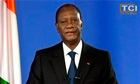
Ouattara calls on fighters in Ivory Coast to lay down their arms and promises dignified treatment for Gbagbo The president-elect of Ivory Coast has heralded “the dawn of a new hope” after the arrest of his rival Laurent Gbagbo. In a television address to the nation, Alassane Ouattara, said his predecessor would receive “dignified treatment”, and called on fighters in Ivory Coast to lay down their arms. “After more than four months of post-electoral crisis, marked by so many human lives lost, we are finally at the dawn of a new era of hope,” Ouattara said on Monday night. He said Gbagbo, his wife Simone and the rest of the former president’s entourage would be investigated by Ivorian authorities. The president-elect added that he intended to establish a truth and reconciliation commission and called on all fighters to put down their arms. The UN’s top human rights body on Tuesday appointed three independent experts to lead an investigation into allegations of serious abuses by both sides. After the dramatic events of Monday night, the streets of Abidjan appeared quiet and calm on Tuesday morning. Sporadic shooting was heard from the French military base in Abidjan in the early hours, but on a smaller scale than in recent days. A convoy of French military vehicles left the base at around 8am local time. It is hoped a massive humanitarian rebuilding project can now begin. The UN World Food Programme (WFP) said it is planning airlifts in the coming days to provide life-saving food assistance to tens of thousands of internally displaced people in Ivory Coast and refugees in neighbouring Liberia. “We need to open up a humanitarian lifeline to the many Ivorians who are now the victims of alarming shortages of food, water and other basic needs,” said WFP’s executive director Josette Sheeran. After four months of growing crisis which threatened to tip Ivory Coast into a civil war, Gbagbo was finally detained on Monday night by forces loyal to Oauttara at the presidential compound . French troops and UN peacekeepers, who had earlier struck Gbagbo’s home in Abidjan, from the air, provided crucial support. One of Ouattara’s top military aides described to the Guardian the final assault by the rebel New Forces, now renamed the Republican Forces . “It was a big battle from midnight until the afternoon,” said Cisse Sindou, the group’s deputy leader. “The militias were everywhere. We had to advance on the residence from 1.5km away. The French troops didn’t want to be on the ground in the last 1.5km. “The Republican Forces got into the garden of the residence. There were no heavy tanks left there after the UN and French air strikes. But the garden was full of militias. There was some resistance from these militias outside the bunker, not inside.” He continued: “We won the battle. We had to have a strategy to keep Mr Gbagbo alive. President Ouattara and Prime Minister [Guillaume] Soro had made clear that he should be taken alive.” “Our military intelligence knows well the structure of the bunker. Gbagbo was believed to have been holed up with 50 family members and supporters. Sindou said he went quietly once he knew the game was up. “We just went in the bunker and got him. When your guard is reduced, what resistance can you put up?” Gbagbo, who had been hiding in the bunker for a week, was interrogated and then taken to the Golf hotel, where Ouattara has been based under UN protection since early December. The two rivals came face to face, but Ouattarra did not speak, Sindou said. He added that a presidential swearing in ceremony would be held soon. He said Ouattara may move the seat of government away from Abidjan, to the Ivory Coast’s official capital, Yamoussoukro. “The important thing now is to secure Abidjan, clean up the streets and deal with those militias. You cannot let the people suffer.” Abidjan – the country’s main city – has been the scene of fierce fighting for the past week after Ouattara’s forces swept down from the north, his stronghold. Following the arrest, Ouattara’s appointed prime minister Soro called on these troops to switch sides. “To all the forces, I make a last appeal to rally [with us] … there cannot be a manhunt,” he said, in an address to the Ivorian people on French television. But some analysts warned that the conflict, which has cost more than 1,500 lives, would be difficult to end, especially because of the French role in removing Gbagbo. The former president, once a history professor and who studied at the Sorbonne, had portrayed the conflict as a fight against foreign forces, and France’s Licorne peacekeepers in particular. “This is just the start of the crisis,” said Kwesi Aning, head of research at the Kofi Annan International Peacekeeping Centre in Ghana. “The role of French Licorne forces undermines Ouattara’s credibility. There may be a lull for a couple of months, but certainly there will be attacks to try to reverse this defeat.” The deep divisions in Ivory Coast, which has been split into north and south since the brief 2002 civil war, mean that Ouattara will have to tread carefully in his handling of Gbagbo, who over the past decade stoked xenophobia aimed at Ivorians whose parents or grandparents came from neighbouring countries. And for all his failings, which included repeatedly postponing elections to stay in power, Gbagbo still commanded a lot of support, winning 46% of the vote in November. Alassane Ouattara Laurent Gbagbo Ivory Coast David Smith Xan Rice Adam Gabbatt guardian.co.uk

 Posted by
on April 12, 2011. Filed under News, Politics, World News.
You can follow any responses to this entry through the RSS 2.0.
You can skip to the end and leave a response. Pinging is currently not allowed.
Posted by
on April 12, 2011. Filed under News, Politics, World News.
You can follow any responses to this entry through the RSS 2.0.
You can skip to the end and leave a response. Pinging is currently not allowed.