Live coverage of Tomlinson inquest
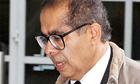
Today’s developments as Dr Freddy Patel begins the third day of his evidence at the inquest into the death of Ian Tomlinson at the G20 protests 11.14am: Back to the hearing: Ryder: The diagnosis that you made was what we may call a default diagnosis? Patel: Yes. Ryder: In other words, you couldn’t work out what it was and so the only other possibility you had was coronary artery disease? Patel: That’s right. To some extent. 11.04am: A quick but important diversion. There has been a major development in an unrelated case concerning the Metropolitan police’s G20 policing operation. In a landmark judgment, the high court has ruled that the Met’s kettle of 4-5,000 climate change protesters during the demonstration was unlawful. The kettle occurred on Bishopsgate, around the same time but in a different part of the City of London to where Tomlinson was struck with a baton and pushed to the ground by Harwood. You can read my colleague Vikram Dodd’s take on the case here . The ruling – a major setback for the Met’s controversial public order unit, CO11 – also found that the use of punches, slaps and baton shields against innocent protesters were unlawful. This video captures the incident in full . It was obtained by the Guardian at the time, and later watched on Youtube more than 500,000 times. 10.54am: It has been revealed that a third pathologist disagreed with Dr Patel . We have heard already that two other pathologists, Dr Nat Cary and Dr Kenneth Shorrock, disagreed with Patel’s natural causes findings, and concluded instead that Tomlinson died of internal bleeding in the abdomen. Ryder has now revealed that a third pathologist, Dr Ben Swift, who examined the body along with Dr Shorrock, also diverged from his conclusions. Swift discovered evidence of bleeding in the “mesentery” (fatty tissue in the abdomen), while Patel conceded he did not find this. Swift’s report stated that he “cannot exclude the the possibility” of a ruptured blood vessel elsewhere in the abdomen. Patel said he would have found any such rupture during his post mortem. 10.33am: Ryder is again asking Patel about the three litres of fluid found in Tomlinson’s abdomen. We know that this is likely to be at the centre of the jury’s deliberations. After two other pathologists concluded that the newspaper seller had died of internal bleeding, Patel returned to his notes and altered them, stating that the three litres were not pure blood but mainly bodily fluid. However, Patel has stated that this fluid initially led him, too, to believe that Tomlinson may have died of internal bleeding, and he tried to find a possible cause of of that bleeding. He did not believe that some of the internal damage he found was sufficient to explain the bleeding. When he could not find the source, through a “process of elimination” he concluded that Tomlinson died of a heart attack. 10.22am: Dr Freddy Patel is back on the stand . He is being questioned by Matthew Ryder QC , the barrister representing Tomlinson’s family. The last exchange yesterday concerned how Tomlinson’s right arm was trapped between his body and the ground after he was pushed by PC Simon Harwood. Ryder has suggested this may have damaged Tomlinson’s liver. Patel has denied this , stating it would have left a mark on the outside of the body. The jury has been shown the video above which, if you look closely, shows Tomlinson’s arm trapped in the aftermath of the fall. 10.10am: The pathologist Dr Freddy Patel is about to begin the third day of his evidence at the Ian Tomlinson inquest. Patel is the pathologist who concluded that Tomlinson died of a heart attack due to natural causes on 1 April 2009, less than three minutes after being being struck with a baton and pushed to the ground by a police officer at the G20 protests in London. Two other pathologists concluded that the 47-year-old died of internal bleeding. Yesterday, Patel said there was a “compelling association” between Tomlinson being pushed to the ground and the subsequent heart attack, but no physical evidence of a causal link. He also told the inquest how, a year after the post mortem, he altered his description of fluid found in Tomlinson’s abdomen after discovering other experts had concluded he died of internal bleeding. You can read yesterday’s liveblog for the details. Ian Tomlinson Dr Freddy Patel Police Paul Lewis guardian.co.uk
 Posted by
on April 14, 2011. Filed under News, Politics, World News.
You can follow any responses to this entry through the RSS 2.0.
You can skip to the end and leave a response. Pinging is currently not allowed.
Posted by
on April 14, 2011. Filed under News, Politics, World News.
You can follow any responses to this entry through the RSS 2.0.
You can skip to the end and leave a response. Pinging is currently not allowed.
Live coverage of Tomlinson inquest
Today’s developments as Dr Freddy Patel begins the third day of his evidence at the inquest into the death of Ian Tomlinson at the G20 protests 11.14am: Back to the hearing: Ryder: The diagnosis that you made was what we may call a default diagnosis? Patel: Yes. Ryder: In other words, you couldn’t work out what it was and so the only other possibility you had was coronary artery disease? Patel: That’s right. To some extent. 11.04am: A quick but important diversion. There has been a major development in an unrelated case concerning the Metropolitan police’s G20 policing operation. In a landmark judgment, the high court has ruled that the Met’s kettle of 4-5,000 climate change protesters during the demonstration was unlawful. The kettle occurred on Bishopsgate, around the same time but in a different part of the City of London to where Tomlinson was struck with a baton and pushed to the ground by Harwood. You can read my colleague Vikram Dodd’s take on the case here . The ruling – a major setback for the Met’s controversial public order unit, CO11 – also found that the use of punches, slaps and baton shields against innocent protesters were unlawful. This video captures the incident in full . It was obtained by the Guardian at the time, and later watched on Youtube more than 500,000 times. 10.54am: It has been revealed that a third pathologist disagreed with Dr Patel . We have heard already that two other pathologists, Dr Nat Cary and Dr Kenneth Shorrock, disagreed with Patel’s natural causes findings, and concluded instead that Tomlinson died of internal bleeding in the abdomen. Ryder has now revealed that a third pathologist, Dr Ben Swift, who examined the body along with Dr Shorrock, also diverged from his conclusions. Swift discovered evidence of bleeding in the “mesentery” (fatty tissue in the abdomen), while Patel conceded he did not find this. Swift’s report stated that he “cannot exclude the the possibility” of a ruptured blood vessel elsewhere in the abdomen. Patel said he would have found any such rupture during his post mortem. 10.33am: Ryder is again asking Patel about the three litres of fluid found in Tomlinson’s abdomen. We know that this is likely to be at the centre of the jury’s deliberations. After two other pathologists concluded that the newspaper seller had died of internal bleeding, Patel returned to his notes and altered them, stating that the three litres were not pure blood but mainly bodily fluid. However, Patel has stated that this fluid initially led him, too, to believe that Tomlinson may have died of internal bleeding, and he tried to find a possible cause of of that bleeding. He did not believe that some of the internal damage he found was sufficient to explain the bleeding. When he could not find the source, through a “process of elimination” he concluded that Tomlinson died of a heart attack. 10.22am: Dr Freddy Patel is back on the stand . He is being questioned by Matthew Ryder QC , the barrister representing Tomlinson’s family. The last exchange yesterday concerned how Tomlinson’s right arm was trapped between his body and the ground after he was pushed by PC Simon Harwood. Ryder has suggested this may have damaged Tomlinson’s liver. Patel has denied this , stating it would have left a mark on the outside of the body. The jury has been shown the video above which, if you look closely, shows Tomlinson’s arm trapped in the aftermath of the fall. 10.10am: The pathologist Dr Freddy Patel is about to begin the third day of his evidence at the Ian Tomlinson inquest. Patel is the pathologist who concluded that Tomlinson died of a heart attack due to natural causes on 1 April 2009, less than three minutes after being being struck with a baton and pushed to the ground by a police officer at the G20 protests in London. Two other pathologists concluded that the 47-year-old died of internal bleeding. Yesterday, Patel said there was a “compelling association” between Tomlinson being pushed to the ground and the subsequent heart attack, but no physical evidence of a causal link. He also told the inquest how, a year after the post mortem, he altered his description of fluid found in Tomlinson’s abdomen after discovering other experts had concluded he died of internal bleeding. You can read yesterday’s liveblog for the details. Ian Tomlinson Dr Freddy Patel Police Paul Lewis guardian.co.uk
 Posted by
on April 14, 2011. Filed under News, Politics, World News.
You can follow any responses to this entry through the RSS 2.0.
You can skip to the end and leave a response. Pinging is currently not allowed.
Posted by
on April 14, 2011. Filed under News, Politics, World News.
You can follow any responses to this entry through the RSS 2.0.
You can skip to the end and leave a response. Pinging is currently not allowed.