Libya, Syria and Middle East unrest – live updates
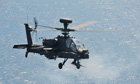
• Nato launches its fiercest attack yet on Gaddafi’s forces • Apache helicopters to be used to break Libya deadlock • Syrian opposition battles rising frustration and divisions • Netanyahu remains defiant on pre-1967 borders 11.27am: There are reports of renewed fighting in the Yemeni capital Sana’a, according to Reuters. “Gunmen and soldiers spread out everywhere and the sound of gunfire can be heard from time to time,” one witness told Reuters. Fighting in the same area on Monday killed seven people including a civilian bystander. The clashes, in the sandbagged streets surrounding a fortified mansion belonging to the wealthy and politically powerful al-Ahmar clan, pitted loyalist forces against guards of Sadiq al-Ahmar, head of the Hashed tribal federation. The government accused Ahmar’s men of igniting the clashes on Monday by firing on a school and the headquarters of state news agency Saba. Ahmar’s office said government forces opened fire when his guards prevented them from entering a school where Ahmar said Saleh loyalists were stockpiling weapons. Early on Tuesday, tribal mediators were holding talks in the Ahmar house to try to bring an end to the clashes, a source in Sadeq al-Ahmar’s office said. Saleh is also from the Hashed federation. Tom Finn, the Guardian’s stringer in Sana’a, tweets : I can’t tell which is louder, the mortar fire in Sana’a right now or the media’s beating of the civil war drum #yemen 11.08am: Britain’s shadow defence secretary Jim Murphy is to ask an urgent question about Libya in the Commons at 12.30pm, according to the BBC’s Laura Kuenssberg. 10.59am: The Guardian’s data team has updated our interactive of Nato’s campaign against Libya to include last night’s heavy bombardment of Tripoli . Some 20 explosions were heard overnight in the city, but the target was just one compound. Here’s what Nato said about the raid : Very early this morning a regime vehicle storage facility adjacent to the Bab Al Aziziyah complex in Tripoli was struck by NATO aircraft using a number of precision guided weapons. This facility is known to have been active during the initial regime suppression of the population in February 2011 and has remained so ever since; resupplying the regime forces that have been conducting attacks against innocent civilians. “Gaddafi’s forces still represent a threat to civilians and we will continue to strike targets that carry out this violence,” said the Commander of Operation Unified Protector, Lieutenant-General Charles Bouchard. 10.44am: The US appears to be edging closer to formerly recognising the government of the Libyan rebels, according to this update from AP> President Barack Obama has invited the Libyan rebels’ National Transitional Council to open an office in Washington, but he stopped short of formal recognition. Jeffrey Feltman, the top US diplomat on the Middle East, totold reporters in the eastern city of Benghazi that he expects Congress to vote soon to let frozen regime assets in the US be used for purely humanitarian aid in Libya. He says the Americans aren’t negotiating with Gaddafi and the opposition council is considered the legitimate representative of the Libyan people. But he did not offer it formal recognition, as other countries have done. 10.26am: The US is considering sanctions against Yemen’s president Saleh as patience with their old ally runs out. The Washington Post reports : In a conversation Sunday just before Saleh refused a third successive peace deal negotiated by Persian Gulf states, White House counterterrorism chief John O. Brennan told the Yemeni president “that if he doesn’t sign, we’re going to have to consider possible other steps,” a senior administration official said. One option, US and Arab officials said, would be to bring Yemen before the UN Security Council for unspecified sanctions. On Monday, the European Union called on Saleh to “transfer power now” and warned that member states “will review their policies toward Yemen.” The blog Armies of Liberation has a thorough account of yesterday’s clashes as Saleh warned of civil war. This YouTube video shows fierce clashes in the capital Sana’a. _ 10.17am: The US now estimates that almost 1,000 people have been killed in the crackdown in Syria, but still the Obama administration is willing to give President Assad time to reform. Here’s what secretary of state Hillary Clinton told a news conference last night: In Syria, the Assad government continues to respond to peaceful protests with brutal violence. By our best estimate, nearly 1,000 people have now been killed. And that is against the backdrop of President Assad talking about reform while his security forces fire bullets into crowds of marchers and mourners at funerals. This cruelty must end, and the legitimate aspirations of the Syrian people must be honored. The US the EU, and others have already imposed sanctions against senior Syrian officials, including new measures announced today targeting President Asad. Foreign Secretary Hague and I are both absolutely consistent with our message to the Assad government: Stop the killings, the beatings, the arrests; release all political prisoners and detainees; begin to respond to the demands that are upon you for a process of credible and inclusive democratic change. President Assad faces a choice: He can lead the transition to democracy that the Syrian people have demanded; or he can, as President Obama said on Thursday, get out of the way. But there is no doubt that if he does not begin to lead that process, his regime will face continuing and increasing pressure and isolation. 10.06am: Camille Otrakji is a rarity – a dissident Syrian blogger who broadly backs the regime. In a provocative appearance on Bloggingheads TV he claims that only 1% of the Syrian population have actively taken part in the protests and around 70% Syrians would support President Assad’s regime if it adopted reform. He also claims the protest movement risks plunging Syria into a civil war. _ 8.54am: Welcome to Middle East Live. To coincide with his visit to the UK Barack Obama has written a joint article with David Cameron vowing not to abandon Arab protesters fighting for democracy . Writing in the Times they say: We will not stand by as their aspirations get crushed in a hail of bombs, bullets and mortar fire. We are reluctant to use force, but when our interests and values come together, we know we have a responsibility to act … We will stand with those who want to bring light into dark, support those who seek freedom in place of repression, aid those laying the building blocks of democracy. As if to underline the point Nato launched a hail of bombs against Libya over night in what is thought to be the fiercest attack yet against Gaddafi’s regime. More than 20 air strikes in less than half an hour set off thunderous booms that rattled windows around the city . My colleague Simon Jeffery is live blogging Obama’s visit . We are going to be focusing on news from, and about, the Middle East. Here’s a run down of the latest developments: • Britain and France are to deploy attack helicopters against Libya in an attempt to break the military stalemate . The decision to deploy Apache helicopters is a clear recognition that high-level bombing from 15,000 feet cannot protect civilians who continue to be attacked by rocket and mortar shells. • Binyamin Netanyahu has repeated his assertion that there can be no return to Israel’s “indefensible” 1967 borders . Speaking to the Jewish lobby in Washington he said: “This conflict has raged for 100 years because the Palestinians refuse to end it. They refuse to accept a Jewish state.” • Gun battles erupted across the capital of Yemen yesterday as security forces clashed with fighters from the country’s most powerful tribe amid rising fears that a breakdown in political negotiations aimed at easing President Ali Abdullah Saleh from power could lead to civil war. The fighting was the fiercest yet between the pro- and anti-Saleh camps and came a day after Saleh backed away from a promise to sign an Arab-brokered deal that would end his 33 years in power. • Syria’s anti-government protesters are battling against internal divisions and growing frustration. There is disagreement about whether or not to negotiate with the government, what tactics to adopt for the street protests, and even whether the demonstrations began too soon. • The Guardian profiles five key figures in the Syrian opposition who are emerging as possible leaders of the Syrian rebellion : Suhair Atassi; Burhan Ghalioun; Radwan Ziadeh; Adnan Mohamed and Michael Kilo. Middle East Libya Muammar Gaddafi Syria Bashar Al-Assad Yemen Israel Matthew Weaver guardian.co.uk

 Posted by
on May 24, 2011. Filed under News, Politics, World News.
You can follow any responses to this entry through the RSS 2.0.
You can skip to the end and leave a response. Pinging is currently not allowed.
Posted by
on May 24, 2011. Filed under News, Politics, World News.
You can follow any responses to this entry through the RSS 2.0.
You can skip to the end and leave a response. Pinging is currently not allowed.