‘I’ll watch oil companies like a hawk’
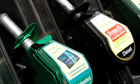
Chancellor says he wants to ensure drivers see benefit of cut in fuel duty and introduction of fair fuel stabiliser funded by £2bn tax on oil company profits George Osborne said he would be watching oil companies “like a hawk” to make sure there was “no funny business” following his budget decision to cut 1p from fuel duty. The chancellor said he wanted to ensure motorists got the benefit of his announcement, which lopped 1p a litre off fuel duty and introduced a fair fuel stabiliser, funded by £2bn of new taxes on the windfall profits of oil companies amid record global prices. Doing the round of broadcast interviews following Wednesday’s announcement, Osborne told ITV’s Daybreak: “We will be watching like a hawk to make sure that motorists get the benefit of the budget changes and make sure that there’s no funny business.” Asked whether there was a mechanism to stop oil companies putting prices up, he said: “I’m not in control of the world’s oil price, unfortunately. What I am in control of are the taxes that go onto oil in Britain – in other words, the duty that gets levied at the petrol station.” He added: “I’m not pretending that this is going to transform the situation overnight for families who are feeling the squeeze, but it helps.” His chief secretary to the Treasury, Danny Alexander, said in an interview on Wednesday, when it was put to him that the Treasury was increasing the tax on oil companies because they were unpopular, that “that’s a fair way of putting it”. Osborne declined to comment, but admitted the sector was “not particularly popular”. Malcolm Webb, the chief executive of Oil and Gas UK, denied that companies would simply pass on the increase in the levy to motorists at the pumps. “Oil is an internationally traded commodity. This is a direct squeeze on the incomes of the oil companies. It won’t affect the consumer at the pump at all,” he told BBC Radio 4′s Today programme. Labour attacked the fuel duty cut as “Del Boy economics” on the grounds that there is a 3p increase in VAT at the same time. The shadow chancellor, Ed Balls, seized on the fact that Osborne’s budget was undermined by the ominous prospect of lower growth, rising unemployment and higher borrowing to claim the government was “clinging to an economic strategy” that is not working. Figures from the independent Office for Budget Responsibility (OBR) showed slower growth would result in £45bn extra borrowing between now and 2015, with growth this year at 1.7% – lower than the 2.1% expected – while 200,000 fewer jobs would be created during this parliament. Balls told Today: “The OBR said yesterday that nothing in the growth plan would make any difference to the growth of the economy. They actually forecast unemployment and borrowing to be higher over the next few years. “George Osborne is, in a blinkered way, carrying on regardless of what people know is the reality. The reality is that it is not working. He is a political chancellor who doesn’t understand the economic reality that he is facing.” The chancellor, on air on the programme an hour later, defended his plan to get Britain back on its feet as the “right course for the country”, with Britain’s growth forecast stronger than France’s, stronger than Italy’s and stronger than the European average. While he wished that growth was “even stronger”, Osborne cited the context of the “deepest recession” in his lifetime. “What I’ve managed to do, I believe, is create the stability, and now given the entrepreneurial boost, to get us into the prosperity we all want to see.” He seized on comments made earlier in the day by Sir Martin Sorrell, the chief executive of the advertising giant WPP, who said the company was now considering returning to the UK. WPP relocated to Dublin in 2008, citing the former Labour government’s plans to tax the profits of companies made overseas. “I have chosen, in a neutral budget, to take money out of oil companies and put it in the hands of families,” Osborne said. “I have chosen to increase taxes on pollution, I’ve chosen to undertake a huge crackdown on tax avoidance, and try and use some of that money to help businesses and help families with their income tax bills. “So yes I have distributed things around the tax system. I’ve done it in a way that is economically smart, because that’s what the country needs at the moment.” Budget 2011 Budget George Osborne Oil Commodities Oil and gas companies Energy industry Motoring Petrol prices Tax and spending Ed Balls Economic policy Economics Global economy Hélène Mulholland guardian.co.uk

 Posted by
on March 24, 2011. Filed under News, Politics, World News.
You can follow any responses to this entry through the RSS 2.0.
You can skip to the end and leave a response. Pinging is currently not allowed.
Posted by
on March 24, 2011. Filed under News, Politics, World News.
You can follow any responses to this entry through the RSS 2.0.
You can skip to the end and leave a response. Pinging is currently not allowed.