Dozens dead in south Sudan clashes
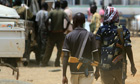
Analysts warn that South Sudan, which will gain independence in July, is at risk of immediately becoming a failed state At least 55 fighters have died in clashes between southern Sudan’s army and a rebel militia, a state minister said. The fighting was the latest development in a wave of violence across the territory, which will gain independence in July. Scores of troops and civilians were injured in the clash, the Upper Nile state information minister, Peter Lam Both, said. The oil-producing south voted to separate from the north in a referendum in January. The referendum was promised in a 2005 peace deal that ended decades of civil war in Sudan, but the region has been beset by violence and insecurity since the poll. The southern army is at war with at least seven rebel militia, and traditional tribal clashes have intensified with the onset of the rainy season, according to the UN, which said more than 800 people have been killed there this year. Analysts have warned that the south risks becoming a failed state and destabilising the region if it cannot control the crisis, with tens of thousands of people displaced by the conflicts affecting nine of its 10 states, the UN said. On Saturday, the army clashed with forces loyal to renegade army commander Gabriel Tang during what was meant to be the reintegration of his forces into southern Sudan’s army, Both said. “We understand that on the side of [Tang's forces], 55 were killed including five of his generals,” Both told Reuters, saying his information had come from the army. “We don’t have reports of those killed from the army and civilian sides, but the [overall] death toll must be much higher,” he said, adding that the state capital, Malakal, had received 34 wounded soldiers and 43 injured civilians. The clashes happened south of Malakal, just across the border in Jonglei state, Both said. In a separate incident in Jonglei, a Sudanese employee of the UN World Food Programme was killed on Friday in an ambush by unknown assailants. In the neighbouring Unity state, renegade army officer Peter Gadet this week began a sustained assault against army forces, with at least 45 people killed so far, officials said. A spokesman for Gadet said the offensive would continue “until victory”. Oil production in the state was disrupted by the violence, according to state officials, who said they first expelled, then readmitted, northern Sudanese workers to oil areas, underscoring the threat the insecurity poses to the economy. The Unity state information minister, Gideon Gatpan Thoar, could not confirm whether the workers had yet returned. Around 98% of the south’s budget comes from oil revenue, and how it shares its oil with the north after independence remains unresolved. It is currently spilt roughly 50-50, and the only pipelines to export oil run through the north. The petroleum ministry could not say how much of the 500,000 barrel daily production was affected by the violence. The southern government accuses the north of sponsoring the militia groups fighting the army – an allegation Khartoum denies. Rebel groups accuse the government of plotting to stay in power indefinitely, not fairly representing and supporting all tribal groups while neglecting development in rural areas. Sudan guardian.co.uk

 Posted by
on April 24, 2011. Filed under News, Politics, World News.
You can follow any responses to this entry through the RSS 2.0.
You can skip to the end and leave a response. Pinging is currently not allowed.
Posted by
on April 24, 2011. Filed under News, Politics, World News.
You can follow any responses to this entry through the RSS 2.0.
You can skip to the end and leave a response. Pinging is currently not allowed.