Cut targets for under-fives – peer
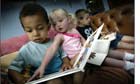
The “nappy curriculum” is drastically in need of reform, a government-commissioned review will say today Childminders and nursery workers feel they’re spending too much time filling in forms, says Dame Clare Tickell, who has reviewed the early years curriculum for the government. Tickell’s review of the Early Years Foundation Stage (EYFS) will recommend today that the curriculum be scaled right back, reducing the number of goals young children are expected to meet from 69 to 17. The EYFS, dubbed the “nappy curriculum”, was introduced by the last Labour government and became mandatory in September 2008. Tickell, chief executive of the Action for Children charity, says: “The early years curriculum is a fantastic resource that has unified and united teachers, and before its introduction there wasn’t the regulation, but what we have now needs revising.” She told the BBC: “We had enormous feedback from people during the review – 3,300 responses. What came back is that practitioners felt a lot of time was taken up filling in boxes and not enough with the children. Much of this work isn’t actually in the early years goals, but it is the way it has been interpreted. “What we have tried to do is make it slimmer and more simple. We have reduced the number of goals from 69 to 17 by clustering them.” She added: “The areas which are important to look at are personal, social and emotional development. But physical is important too. Professionals need to recognise when a child is not developing and understand what to do.” Tickell’s report will say that the EYFS is “too bureaucratic” at present. Primary school teachers have said the EYFS reports they get on five-year-olds are meaningless because the children are being measured against too many targets. A revamped EYFS should be more in line with what children will be expected to learn at primary school, to help get them ready for the classroom. Tickell was asked to carry out a review of EYFS last summer, after ministers raised concerns that the curriculum was too rigid and put too many burdens on childcare workers. Dr Mary Bousted, general secretary of the Association of Teachers and Lecturers, says: “We hope the review looks at children’s overall readiness to go to school, including their communications, social, physical, and emotional development, and does not just focus on literacy and numeracy.” Early years education Primary schools Schools Teaching Children Childcare Judy Friedberg guardian.co.uk

 Posted by
on March 30, 2011. Filed under News, Politics, World News.
You can follow any responses to this entry through the RSS 2.0.
You can skip to the end and leave a response. Pinging is currently not allowed.
Posted by
on March 30, 2011. Filed under News, Politics, World News.
You can follow any responses to this entry through the RSS 2.0.
You can skip to the end and leave a response. Pinging is currently not allowed.