CJD risk for Welsh hospital patients
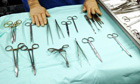
Thirty-eight patients in south Wales underwent surgery with instruments used on person at high risk of fatal brain condition Thirty-eight patients who underwent surgery with instruments previously used on a patient at high risk of the fatal brain condition CJD have been warned they may contract the disease. Health authorities say the likelihood of the long-incubating Creutzfeldt–Jakob disease having spread is low. However, the concerns over possible sterilisation problems at a hospital in south Wales in 2007 echo those raised at Middlesbrough general hospital in 2002 when 24 patients were told they had been exposed to risk . The hospital is not being named but it is overseen by the Abertawe Bro Morgannwg health board, which includes hospitals in Swansea, Maesteg and Port Talbot. A statement from Public Health Wales on Monday said: “Letters were sent to those at risk after it became apparent that a patient who underwent surgery in a hospital in the Abertawe Bro Morgannwg health board area in 2007 was at high risk of the disease. “All surgical instruments used on the patient were removed from use when the patient’s history became known, and all patients operated on with the same instruments in the interim have now been informed.” Jörg Hoffmann, its consultant in communicable disease control, said: “In this incident, we do not have a single confirmed case of CJD. However, we do have one patient who was at high risk and 38 people at extremely low risk. “We know that all the surgical instruments used on this group of patients were cleaned, disinfected and sterilised normally. However, it is possible that the proteins that cause CJD, known as prions, survived these routine sterilisation procedures so an extremely small risk of transmission remains. “We have identified and written to all patients concerned to make them aware of the extremely low risk. They have been offered information and support and a helpline has been set up for anyone who has received a letter and has further questions.” He said there was no risk to anybody else. The statement did not say how it had emerged that the initial patient had been discovered to be at high risk of CJD, nor what type of surgery he or she had undergone. For decades there has been concern over the possibility of CJD, or its variant – originally caused by eating contaminated meat from BSE-infected cows – being transmitted through surgery. There have, however, only been six cases worldwide of any form of CJD being transmitted in this way. The Middlesbrough case led to a UK overhaul of guidance on the quarantining of instruments used on “risky” patients and the handling of such cases. Health Wales NHS James Meikle guardian.co.uk
 Posted by
on March 29, 2011. Filed under News, Politics, World News.
You can follow any responses to this entry through the RSS 2.0.
You can skip to the end and leave a response. Pinging is currently not allowed.
Posted by
on March 29, 2011. Filed under News, Politics, World News.
You can follow any responses to this entry through the RSS 2.0.
You can skip to the end and leave a response. Pinging is currently not allowed.
CJD risk for Welsh hospital patients
Thirty-eight patients in south Wales underwent surgery with instruments used on person at high risk of fatal brain condition Thirty-eight patients who underwent surgery with instruments previously used on a patient at high risk of the fatal brain condition CJD have been warned they may contract the disease. Health authorities say the likelihood of the long-incubating Creutzfeldt–Jakob disease having spread is low. However, the concerns over possible sterilisation problems at a hospital in south Wales in 2007 echo those raised at Middlesbrough general hospital in 2002 when 24 patients were told they had been exposed to risk . The hospital is not being named but it is overseen by the Abertawe Bro Morgannwg health board, which includes hospitals in Swansea, Maesteg and Port Talbot. A statement from Public Health Wales on Monday said: “Letters were sent to those at risk after it became apparent that a patient who underwent surgery in a hospital in the Abertawe Bro Morgannwg health board area in 2007 was at high risk of the disease. “All surgical instruments used on the patient were removed from use when the patient’s history became known, and all patients operated on with the same instruments in the interim have now been informed.” Jörg Hoffmann, its consultant in communicable disease control, said: “In this incident, we do not have a single confirmed case of CJD. However, we do have one patient who was at high risk and 38 people at extremely low risk. “We know that all the surgical instruments used on this group of patients were cleaned, disinfected and sterilised normally. However, it is possible that the proteins that cause CJD, known as prions, survived these routine sterilisation procedures so an extremely small risk of transmission remains. “We have identified and written to all patients concerned to make them aware of the extremely low risk. They have been offered information and support and a helpline has been set up for anyone who has received a letter and has further questions.” He said there was no risk to anybody else. The statement did not say how it had emerged that the initial patient had been discovered to be at high risk of CJD, nor what type of surgery he or she had undergone. For decades there has been concern over the possibility of CJD, or its variant – originally caused by eating contaminated meat from BSE-infected cows – being transmitted through surgery. There have, however, only been six cases worldwide of any form of CJD being transmitted in this way. The Middlesbrough case led to a UK overhaul of guidance on the quarantining of instruments used on “risky” patients and the handling of such cases. Health Wales NHS James Meikle guardian.co.uk
Posted by
on March 29, 2011. Filed under News, Politics, World News.
You can follow any responses to this entry through the RSS 2.0.
You can skip to the end and leave a response. Pinging is currently not allowed.
CJD risk for Welsh hospital patients
Thirty-eight patients in south Wales underwent surgery with instruments used on person at high risk of fatal brain condition Thirty-eight patients who underwent surgery with instruments previously used on a patient at high risk of the fatal brain condition CJD have been warned they may contract the disease. Health authorities say the likelihood of the long-incubating Creutzfeldt–Jakob disease having spread is low. However, the concerns over possible sterilisation problems at a hospital in south Wales in 2007 echo those raised at Middlesbrough general hospital in 2002 when 24 patients were told they had been exposed to risk . The hospital is not being named but it is overseen by the Abertawe Bro Morgannwg health board, which includes hospitals in Swansea, Maesteg and Port Talbot. A statement from Public Health Wales on Monday said: “Letters were sent to those at risk after it became apparent that a patient who underwent surgery in a hospital in the Abertawe Bro Morgannwg health board area in 2007 was at high risk of the disease. “All surgical instruments used on the patient were removed from use when the patient’s history became known, and all patients operated on with the same instruments in the interim have now been informed.” Jörg Hoffmann, its consultant in communicable disease control, said: “In this incident, we do not have a single confirmed case of CJD. However, we do have one patient who was at high risk and 38 people at extremely low risk. “We know that all the surgical instruments used on this group of patients were cleaned, disinfected and sterilised normally. However, it is possible that the proteins that cause CJD, known as prions, survived these routine sterilisation procedures so an extremely small risk of transmission remains. “We have identified and written to all patients concerned to make them aware of the extremely low risk. They have been offered information and support and a helpline has been set up for anyone who has received a letter and has further questions.” He said there was no risk to anybody else. The statement did not say how it had emerged that the initial patient had been discovered to be at high risk of CJD, nor what type of surgery he or she had undergone. For decades there has been concern over the possibility of CJD, or its variant – originally caused by eating contaminated meat from BSE-infected cows – being transmitted through surgery. There have, however, only been six cases worldwide of any form of CJD being transmitted in this way. The Middlesbrough case led to a UK overhaul of guidance on the quarantining of instruments used on “risky” patients and the handling of such cases. Health Wales NHS James Meikle guardian.co.uk
Posted by
on March 29, 2011. Filed under News, Politics, World News.
You can follow any responses to this entry through the RSS 2.0.
You can skip to the end and leave a response. Pinging is currently not allowed.
CJD risk for Welsh hospital patients
Thirty-eight patients in south Wales underwent surgery with instruments used on person at high risk of fatal brain condition Thirty-eight patients who underwent surgery with instruments previously used on a patient at high risk of the fatal brain condition CJD have been warned they may contract the disease. Health authorities say the likelihood of the long-incubating Creutzfeldt–Jakob disease having spread is low. However, the concerns over possible sterilisation problems at a hospital in south Wales in 2007 echo those raised at Middlesbrough general hospital in 2002 when 24 patients were told they had been exposed to risk . The hospital is not being named but it is overseen by the Abertawe Bro Morgannwg health board, which includes hospitals in Swansea, Maesteg and Port Talbot. A statement from Public Health Wales on Monday said: “Letters were sent to those at risk after it became apparent that a patient who underwent surgery in a hospital in the Abertawe Bro Morgannwg health board area in 2007 was at high risk of the disease. “All surgical instruments used on the patient were removed from use when the patient’s history became known, and all patients operated on with the same instruments in the interim have now been informed.” Jörg Hoffmann, its consultant in communicable disease control, said: “In this incident, we do not have a single confirmed case of CJD. However, we do have one patient who was at high risk and 38 people at extremely low risk. “We know that all the surgical instruments used on this group of patients were cleaned, disinfected and sterilised normally. However, it is possible that the proteins that cause CJD, known as prions, survived these routine sterilisation procedures so an extremely small risk of transmission remains. “We have identified and written to all patients concerned to make them aware of the extremely low risk. They have been offered information and support and a helpline has been set up for anyone who has received a letter and has further questions.” He said there was no risk to anybody else. The statement did not say how it had emerged that the initial patient had been discovered to be at high risk of CJD, nor what type of surgery he or she had undergone. For decades there has been concern over the possibility of CJD, or its variant – originally caused by eating contaminated meat from BSE-infected cows – being transmitted through surgery. There have, however, only been six cases worldwide of any form of CJD being transmitted in this way. The Middlesbrough case led to a UK overhaul of guidance on the quarantining of instruments used on “risky” patients and the handling of such cases. Health Wales NHS James Meikle guardian.co.uk
 Posted by
on March 29, 2011. Filed under News, Politics, World News.
You can follow any responses to this entry through the RSS 2.0.
You can skip to the end and leave a response. Pinging is currently not allowed.
Posted by
on March 29, 2011. Filed under News, Politics, World News.
You can follow any responses to this entry through the RSS 2.0.
You can skip to the end and leave a response. Pinging is currently not allowed.