British-French advisory team sent to Benghazi
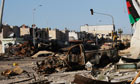
Joint force HQ to advise rebels indicates serious nature of move, while Gaddafi’s communications targeted by Nato A joint British-French military team of advisers is to be sent to Benghazi in a move that is likely to lead to accusations of mission creep. Separately, Nato has said its missiles have targeted Gaddafi’s communications network. The moves came after rebels warned that the besieged town of Misrata would fall within days. The UK-French team will advise the rebels on intelligence-gathering, logistics, and communications. In an indication of the serious nature of the move, the team will be run by a joint force headquarters, the Guardian has learned. Officials stress that the team consists of advisers, rather than trainers, and that the move does not involve arming the rebels. There are no plans for the team to go to Misrata, the officials added. William Hague, the foreign secretary, said in a statement that the team “will enable the UK to build on the work already being undertaken to support and advise the NTC [National Transitional Council] on how to better protect civilians”. He added: “In particular they will advise the NTC on how to improve their military organisational structures, communications and logistics, including how best to distribute humanitarian aid and deliver medical assistance.” Hague said the British section of the team will consist of “experienced British military officers”. UK special forces would not be involved, officials said. Hague said that the deployment was “fully within the terms of UNSCR 1973 both in respect of civilian protection and its provision expressly ruling out a foreign occupation force on Libyan soil”. Meanwhile, British, French, and Danish aircraft have extended Nato’s targets in Libya to include small satellite communications systems and telephone exchanges, officials said. The strikes, which took place over the past two days, were described as representing a clear “shift” in targeting policy, they said. The British submarine HMS Triumph, returning to the Mediterranean after restocking with Tomahawk missiles, is understood to have fired a number of cruise missiles at Libyan communications targets over the past two days. Oana Lungescu, Nato’s chief spokesperson, told a briefing at the alliance’s Brussels headquarters that the coalition had flown more than 2,800 sorties, 1,000 a week, of which half were strike sorties. Brigadier General Mark van Uhm, Nato’s chief of allied operations, described the situation on the ground in Libya as “fluid and changing constantly”. Ammuniton bunkers, radars, rocket launchers, and tanks, as well as communications structure had been desrtroyed, “but nothing indicated he had any intention of disengaging his forces”. Van Uhm said over the past 36 hours, Nato air strikes had aimed at degrading Gaddafi’s “capacity to command and control, facilities and communcate with his forces”. The strikes “will continue until [there is] a clear signal civilians are no longer under threat”, he added. The general said Nato strikes last night hit mobile rocket launchers and armoured vehicles advancing near Misrata. He added: “But there is limit what can be achieved with air power to stop fighting in a city”. Libya Arab and Middle East unrest Middle East Muammar Gaddafi Nato Military Richard Norton-Taylor guardian.co.uk

 Posted by
on April 19, 2011. Filed under News, Politics, World News.
You can follow any responses to this entry through the RSS 2.0.
You can skip to the end and leave a response. Pinging is currently not allowed.
Posted by
on April 19, 2011. Filed under News, Politics, World News.
You can follow any responses to this entry through the RSS 2.0.
You can skip to the end and leave a response. Pinging is currently not allowed.