Egypt tense after deadly raid on Tahrir Square
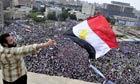
• Egypt tense after army stage pre-dawn raid on Tahrir Square • Beleaguered Yemeni president warns against ‘intervention’ • Red Cross ship docks in besieged Libyan city of Misrata • Syrian activists call for daily protests following bloodiest day in three-week-old uprisin g • Click here for full coverage of Friday’s developments 12.39pm: Rising tensions in Egypt between the military and protesters in Tahrir Square are reflected in this tweet from Mosa’ab Elshamy , an Egyptian student and photographer: The notorious “Army and people, hand in hand” chant has been replaced with “People and people, hand in hand”. Sad, to say the least. #Tahrir 12.25pm: Relatives of victims of the Lockerbie bombing have asked their lawyers to request a meeting with Moussa Koussa, the former Libyan foreign minister who has defected to Britain. Koussa is believed to have been an intelligence officer when PanAm flight 103 was blown up over Lockerbie in 1988, leaving 270 people dead. The Press Association reports that Dr Jim Swire, whose 23-year-old daughter Flora died in the attack, confirmed that the legal team representing the victims’ families had been instructed to approach officials with a view to setting up a meeting with Koussa (left). He warned that anything Koussa said would have to be taken with “a huge pinch of salt”, however. Koussa was head of Muammar Gaddafi’s intelligence agency from 1994 and a senior intelligence agent when PanAm flight 103 was blown up over Lockerbie. The Boeing 747 jumbo jet was en route from London to New York when it exploded over the Scottish town, killing 243 passengers, 16 crew and 11 residents. Abdelbaset Ali Mohmed Al Megrahi was jailed for mass murder in 2001 but the Libyan was returned to Tripoli in 2009 on compassionate grounds after doctors treating him for prostate cancer gave him an estimated three months to live. Dr Swire added: “The underlying problem is that many of us are not satisfied with the verdict that Megrahi was guilty as charged.” “Koussa was at the centre of the regime in 1988, so if anyone knows the role Libya had to play in it, he would. It’s important for us to get any information that we can. “But anything he would say would have to be taken with a huge pinch of salt because of his current predicament.” The request from the victims’ families comes after Scottish police and prosecutors met Koussa on Thursday as part of their investigation into the bombing. He arrived in the UK last week. 12.08pm: Syrian security forces used live ammunition overnight on Saturday to disperse a pro-democracy protest by hundreds of people in a Sunni district of Latakia, according to a report from Reuters. The shooting reportedly caused scores of injuries and possible deaths, said residents, including one who ess saw water trucks hosing down the scene in the Sleibeh district of the city of Latakia, Syria’s main port, 330 km (210 miles) northwest of the capital. Anti-government demonstrations spread across Syria yesterday with the highest turnout yet in a month of unrest, despite a heavy crackdown by security forces in the city of Deraa in which at least 22 people were reported killed. 12.02pm: It’s shaping up to be a busy day in terms of news across the middle east. Using an interactive map put together by the Guardian , you can follow the latest tweets around the Arab world and the region from our network of journalists, bloggers and experts. 11.51am: Tamer El Said, an Egyptian filmaker, was in Tahrir Square throughout Friday and during the late night attack. My colleague Peter Beaumont has just spoken to him: There was a huge demonstration that started at about 11 o’clock. There were some military officers who joined it who were dissatisfied with what the Supreme Military Council was doing. There were between 15-20 of them. Obviously it was really dangerous for them so the other protesters decided that it would protect them from being arrested by the military police. “At about 11 o’clock last night the security forces, who had surrounded the square, tried to enter it to try and catch these soldiers but the protesters would not allow them to come in. There was army and police and special forces. At 3 o’clock they attacked the square. They were firing bullets in the air at first then rubber bullets and then live rounds. They pushed all the demonstrators out of the square. Then they started to chase the protesters into the surrounding streets and into the down town area using tear gas and bullets. I have a friend who was there who said there was continuous shooting. 11.33am: Peter Beaumont, the Observer’s foreign affairs editor, has filed a news piece on the clashes in Cairo . They come amid increasing tensions between Egypt’s ruling military and protesters impatient at the pace of reform and moves towards prosecuting members of the old regime. 11.10am: As Egypt turns a new and dangerous corner, we’re going to be bringing you more coverage shortly of events in Cairo, where soldiers beat hundreds of protesters with clubs and fired into the air in a pre-dawn raid on protestors in Tahrir Square. In the meantime, here is some quite raw but startling footage capturing the moment when that raid took place. To watch the full video, turn off the auto-refresh button at the top of this page: _ 10.57am: As the fall-out from uprisings around the middle east continues, the most intense round of fighting since Israel’s 2008-2009 offensive is taking place between Israeli forces and militants in Gaza. Israel pounded Hamas targets in the strip with air strikes and tank shells today, killing four militants according to Palestinian officials contacted by the Associated Press news agency. As Palestinian missiles landed in Israel, AP reported: In all, 18 Gazans have been killed and more than 65 wounded since Israel unleashed the strikes following a Hamas attack on an Israeli school bus Thursday. An anti-tank rocket struck the bus, seriously wounding a 16-year-old boy and injuring the driver. After Israel’s devastating military offensive in the winter of 2008-2009, Gaza’s Hamas rulers had largely observed a cease-fire, and it was not immediately clear why the Islamic militants chose to end their relative restraint. Israel, in turn, has pledged to strike back hard for the bus attack, in an attempt to restore the deterrence created by the Gaza war. Early Saturday, an Israeli airstrike struck a car near Rafah in southern Gaza, killing three Hamas militants. Hamas said one of its top commanders, 29-year-old Tayser Abu Snima, and two of his assistants were killed. Later, Hamas said a tank shell killed another militant near the Jabalya neighborhood in Gaza. The Israeli military said it was not aware of a strike involving a tank shell. Overall, the Palestinian death toll since Thursday includes 11 militants, a Hamas policeman and six civilians. Hamas and Islamic Jihad fired more than 15 missiles into Israel Saturday. The rockets reached the vicinity of the Israeli cities of Ashdod, Ashkelon and Beersheba. The military confirmed that its newly deployed Iron Dome defense system knocked some of them down. No Israelis were wounded in the attacks. 10.39am: Good morning. Welcome to the Guardian’s live coverage of events in the Middle East. Here is a summary of major news events: • Soldiers beat hundreds of protesters with clubs and fired into the air in a pre-dawn raid that wounded 15 people on Saturday to disperse an overnight demonstration in Cairo’s central Tahrir Square. The troops eventually withdrew, enabling demonstrators to reoccupy the square and block the streets leading into it. Armed with sticks and other makeshift weapons, they vowed not to leave until the defense minister, the titular head of state, has resigned. A force of around 300 soldiers swept into the square around 3am. and waded into a tent camp in the center where protesters had formed a human cordon to protect several army officers who had joined their demonstration in defiance of their superiors. • Yemen has recalled its ambassador from Qatar for consultation after Qatar’s prime minister said Gulf states had a plan for embattled Yemeni President Ali Abdullah Saleh to step down. Protests in Yemen descended into violence on Friday with at least five people killed and dozens wounded as Saleh rejected the Gulf Arab plan to secure an end to his 32 years in power. Saleh told tens of thousands of supporters in the capital: “We don’t get our legitimacy from Qatar or from anyone else … we reject this belligerent intervention.” • There has been a breakthrough in humanitarian efforts to relieve the besieged Libyan town of Misrata after a ship carrying medical supplies docked there, while the Red Cross also said it was sending aid workers to Zawiyah, west of Tripoli. The Red Cross began negotiations with Libyan government officials a week ago on access to western areas under its control. The organisation is already deployed in rebel-held eastern territory, mainly in the cities of Benghazi and Tobruk. Rebel fighters say they have meanwhile pushed deeper toward the oil port of Brega, a key prize in the back-and-forth battles with government forces. • Syrian anti-government activists have called for daily protests against the regime after at least 32 people were killed in the single bloodiest day of demonstrations in the country’s three-week uprising. Most of the dead were reported in the restive southern city of Daraa, where burials are planned for today Rights activists and witnesses said that security forces opened fire on Friday on tens of thousands of protesters in Daraa, killing 25 people and wounding hundreds. Arab and Middle East unrest Egypt Libya Syria Yemen Middle East Ben Quinn guardian.co.uk

 Posted by
on April 9, 2011. Filed under News, Politics, World News.
You can follow any responses to this entry through the RSS 2.0.
You can skip to the end and leave a response. Pinging is currently not allowed.
Posted by
on April 9, 2011. Filed under News, Politics, World News.
You can follow any responses to this entry through the RSS 2.0.
You can skip to the end and leave a response. Pinging is currently not allowed.