Top 10 deranged characters
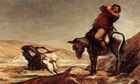
From Don Quixote to A Clockwork Orange, Edward Docx considers the fictional characters who ‘tell the terrible truth about the world’ Edward Docx’s first novel, The Calligrapher, was published to widespread acclaim in 2003 and has now been translated into eight languages. His second novel, Self Help, published in 2007, was longlisted for the Man Booker prize and went on to win The Geoffrey Faber prize. In 2003 and then again in 2007, Docx travelled in South America as part of the research for his third novel, The Devil’s Garden, which is published this week. “I have always preferred reading in the insightful company of lunatics. Sometimes, it’s a gradual Nabokovian thing – the unassuming reader and the engaging protagonist set off together and only gradually does the former begin to realise that the latter is a madman. And sometimes, as with Burgess, it’s all abundantly clear from the off. “Either way, the reason that there is such a great tradition of madness in literature is that it provides the author with a way to tell the terrible truth about the world while opening up a gap between what is superficially being narrated and what is really going on – adding depth, in other words.

 Posted by
on April 6, 2011. Filed under News, Politics, World News.
You can follow any responses to this entry through the RSS 2.0.
You can skip to the end and leave a response. Pinging is currently not allowed.
Posted by
on April 6, 2011. Filed under News, Politics, World News.
You can follow any responses to this entry through the RSS 2.0.
You can skip to the end and leave a response. Pinging is currently not allowed.