The last yarn of Bradford mill
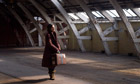
Workers once came from all over the world to work in Lumb Lane. Now the defunct Bradford mill is being used to stage their stories Lumb Lane was, for a long time, Bradford’s most notorious address. Once the main kerb-crawling route through the city’s red light district, the road was synonymous with race riots, sex workers and serial killers. It was here that Peter Sutcliffe, the Yorkshire Ripper, committed his first murders. But today Lumb Lane is a peaceful, if slightly down-at-heel strip of mosques, mini-cab firms and grocery stores run by eastern Europeans. Yet there are signs of life stirring in what was once the industrial heart of the area: the seven-acre James Drummond and Sons complex. Known locally as Lumb Lane mill, Drummonds opened in 1886 and soon became a yarn-producing powerhouse, providing employment for the entire region. The mill staggered on through the postwar period, mostly employing immigrants from Ireland, eastern Europe, Ukraine and Pakistan. But the gates finally closed in 2001, and they remained that way until a group of theatre-makers came along. The Mill: City of Dreams is the fruit of their labours, an ambitious promenade event that will lead audiences through Drummonds’ dark, abandoned spaces, discovering intimate, dramatic reconstructions of the lives of former workers. The script, which has been boiled down from hundreds of hours of interviews with residents and ex-mill-workers, is the brainchild of writer and director Madani Younis, of Bradford’s Freedom Studios company, with guidance from Jonathan Holmes, a specialist in whopping site-specific events. In 2007, Holmes staged his play Fallujah, about the siege of the Iraqi city, in an old London brewery; two years later, his play Katrina recreated the aftermath of the hurricane in a five-storey warehouse on the South Bank. The audience has an active part to play in The Mill: you enter via a smart sales suite, where a team of developers attempt to sell you a vision of the mill regenerated into luxury apartments. Yet instead of show flats, you find haunting vignettes of the mill’s former life, played by a cast of professional actors augmented by a large chorus of local volunteers. Yet Drummonds is so vast that simply walking through the abandoned space is a drama in itself. Stripped of machinery, the weaving shed is a rust-stained expanse the size of a football pitch, its long corridors lined with offices and cubby holes. The architectural climax, though, is on the top floor: a barrel-shaped glasshouse lined with curving wooden struts. It’s like standing in the ribcage of a giant whale. “This was the wool-sorting floor,” says Younis. “It still stank of lanolin when we first came in.” The workshop was freezing in winter and a furnace in summer, but sorting wool fibres had to be done in daylight. Younis became intrigued by the fate of Bradford’s redundant mills when he first moved to the area and discovered that the majority were either abandoned or being used as social centres and snooker halls. “The

 Posted by
on March 27, 2011. Filed under News, Politics, World News.
You can follow any responses to this entry through the RSS 2.0.
You can skip to the end and leave a response. Pinging is currently not allowed.
Posted by
on March 27, 2011. Filed under News, Politics, World News.
You can follow any responses to this entry through the RSS 2.0.
You can skip to the end and leave a response. Pinging is currently not allowed.