Gaddafi’s compound hit in Libya air strikes
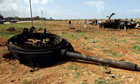
• Coalition forces launched a second wave of strikes • Dispute over whether civilians have been killed • Italy joins France, US, Britain and others • Gaddafi officials announce a fresh ceasefire Follow live updates here 9.34am: The EU’s top foreign policy official is trying to play down cracks in the coalition. Catherine Ashton says the head of the Arab League, Amr Moussa, was misquoted when he expressed alarm at reported civilians deaths in the first raids. “Moussa was misquoted, as I understand it,” said Ashton, without elaborating on what she thought what Moussa actually said. Shortly after the air strikes began, Moussa yesterday told reporters in Cairo that, “What happened differs from the no-fly zone objectives. What we want is civilians’ protection not shelling more civilians.” 9.25am: British commanders have insisted that the targets so far have been “carefully selected to avoid civilian casualties”. Earlier we heard France say it had no evidence of any civilian casualties , apparently in response to the Arab League calling for an emergency meeting and claiming coalition strikes had “led to the deaths and injuries of many Libyan civilians”. The Guardian’s security and defence correspondent, Nick Hopkins, has been speaking to Air Vice Marshall Phil Osborn, who said the military are “hugely aware of the risks”. “The targeting would have been highly detailed. We will not proceed against targets if the risk is deemed to be unacceptable. The risk of collateral damage is at the forefront of our minds.” Major General John Lorimer told Nick: “Targets were carefully selected to avoid civilian casualties and to strike at key military instillations in Libya.” 9.12am: The Guardian’s Chris McGreal is at “what is now the front line”, 9km outside Ajdabiya, having travelled with rejuvenated rebel forces from Benghazi. He says rebel forces have gained 150km of ground , and a substantial amount of morale, since coalition air strikes began on Saturday morning. He says Gaddafi’s forces have been driven all the way back to the edge of Ajdabiya – having previously been on the outskirts of Benghazi – but are repelling any further advance by the rebels. There definitely is continuing resistance. There have been a number of incoming tank rounds from Gaddafi’s forces, which suggests that they’ve still got tanks, they may still have some rockets. But above us now we can hear planes, which we have to assume are coalition planes, and we have heard a number of very deep explosions in the past few minutes which suggests those are attacks by coalition forces, possibly on those same tanks which were shelling us just a few minutes earlier. Chris says: “If the coalition air forces are now turning their attention to those Gaddafi forces around Ajdabiya I can only imagine they’re going to meet the same fate as they did on the edge of Benghazi, which was fairly comprehensive destruction”. 9.06am: Reports of air strikes on or around Gaddafi-held Ajdabiya in the last few minutes. More shortly. 8.50am: I’ve just been speaking to the Guardian’s Ian Black , who is in Tripoli and has more on the alleged bombing of Gaddafi’s compound in the capital by coalition forces. The compound was famously bombed in 1986 by the US in retaliation for a terrorist attack blamed on Libya against US troops in Germany, which gives a “symbolic significance” to the strike, Ian says. Something happened, certainly, in the centre of Tripoli last night I could certainly see a substantial column of smoke rising from the general direction of it, maybe a couple of miles from where I am. There was a lot of very, very loud, but pretty erratic, anti-aircraft fire going up around the same time, and later on in the middle of the night some reporters were taken to the compound to see the damage. Ian says journalists were shown a three storey building that was “in ruins”, but there was no smoke or flames at the scene. He adds: “Whatever happened has been used quite energetically by the Libyan propaganda system to present its view of what is going on. It’s hard to say what exactly did happen.” 8.27am: The head of the Gulf’s main political bloc, the Gulf Cooperation Council, has said Qatar and the United Arab Emirates remain part of the international military coalition. Abdul Rahman bin Hamad al-Attiyah said the two states are part of the coalition, despite criticism from Arab League’s Secretary-General Amr Moussa that the attacks had killed civilians. Al-Attiyah did not clarify Qatar and the UAE’s role or say whether they have taken part in air strikes. He spoke on the sidelines of a regional security meeting in Abu Dhabi. The GCC includes Saudi Arabia, Qatar, Bahrain, Oman, Kuwait and the United Arab Emirates. 8.13am: Yesterday we heard that supporters of Gaddafi had formed a human shield around his compound in Tripoli, with men, women and children singing songs against the rebel “germs”. But it is likely such fervour does not quite sum up the mood of all those in the capital, with many tweets suggesting less warmth towards the Libyan leader. @OurLibya Tripoli’s silence is not a sign of consent. it is muted by Gaddafi brutality.I live in Tripoli and I know what I am talking about.#Libya 8am: Good morning, welcome to the Guardian’s live coverage of the continuing military intervention in Libya, as Gaddafi remains in power. • Coalition forces have launched the second night of air strikes on Libya after halting the advance of Muammar Gaddafi’s forces on Benghazi and targeting air defences to allow their planes to enforce the no-fly zone. Vice Admiral Bill Gortney, director of the US military’s Joint Staff, told reporters there had been no new Libyan air activity or radar emissions, but a significant decrease in Libyan air surveillance, since the strikes began on Saturday. Benghazi was not yet free from threat, Gortney said, but Gaddafi’s forces in the area were in distress and “suffering from isolation and confusion” after the air assaults. • France – the first country to bomb Libya on Saturday – said on Monday morning it has no evidence of civilians being killed, contradicting the Arab League, which had said the strikes had “led to the deaths and injuries of many Libyan civilians”. A Libyan government health official said 64 people had been killed by Western bombardment on Saturday and Sunday morning, while the Arab League Secretary-General Amr Moussa called for an emergency meeting of the group’s 22 states to discuss Libya. He requested a report on the bombardment, which he said had “led to the deaths and injuries of many Libyan civilians”. “What is happening in Libya differs from the aim of imposing a no-fly zone, and what we want is the protection of civilians and not the bombardment of more civilians,” Egypt’s state news agency quoted him as saying. French government spokesman Francois Baroin told television Canal+ that “there is no information of killed civilians that the French command is aware of”. • Italy joined the attacks on Sunday night, as Gaddafi officials claimed the Libyan leader’s Tripoli compound had been targeted. Libyan officials took Western reporters to Gaddafi’s compound in Tripoli – a sprawling complex that houses his private quarters as well as military barracks, anti-aircraft batteries and other installations – to show what they claimed was the site of a missile attack two hours earlier. “It was a barbaric bombing,” said government spokesman Mussa Ibrahim, showing pieces of shrapnel that he said came from the missile. “This contradicts American and Western [statements] … that it is not their target to attack this place.” The Guardian has been unable to confirm the damage was caused by coalition air strikes. • The onslaught resumed last night despite a ceasefire announced by the Libyan authorities at 7pm UK time. “We, the Popular Social Leadership of Libya, recommend to the armed forces to announce an immediate ceasefire to all military units,” said regime spokesman Ibrahim Moussa in a pre-prepared statement. Earlier in the day, the Libyan dictator had threatened “a long war”, and his forces launched a fresh assault on rebels in Misrata, where one resident in the town said pro-Gaddafi boats in the port were preventing aid from reaching the town. Libya Arab and Middle East protests Protest Muammar Gaddafi Military Adam Gabbatt guardian.co.uk
 Posted by
on March 21, 2011. Filed under News, Politics, World News.
You can follow any responses to this entry through the RSS 2.0.
You can skip to the end and leave a response. Pinging is currently not allowed.
Posted by
on March 21, 2011. Filed under News, Politics, World News.
You can follow any responses to this entry through the RSS 2.0.
You can skip to the end and leave a response. Pinging is currently not allowed.
Gaddafi’s compound hit in Libya air strikes
• Coalition forces launched a second wave of strikes • Dispute over whether civilians have been killed • Italy joins France, US, Britain and others • Gaddafi officials announce a fresh ceasefire Follow live updates here 9.34am: The EU’s top foreign policy official is trying to play down cracks in the coalition. Catherine Ashton says the head of the Arab League, Amr Moussa, was misquoted when he expressed alarm at reported civilians deaths in the first raids. “Moussa was misquoted, as I understand it,” said Ashton, without elaborating on what she thought what Moussa actually said. Shortly after the air strikes began, Moussa yesterday told reporters in Cairo that, “What happened differs from the no-fly zone objectives. What we want is civilians’ protection not shelling more civilians.” 9.25am: British commanders have insisted that the targets so far have been “carefully selected to avoid civilian casualties”. Earlier we heard France say it had no evidence of any civilian casualties , apparently in response to the Arab League calling for an emergency meeting and claiming coalition strikes had “led to the deaths and injuries of many Libyan civilians”. The Guardian’s security and defence correspondent, Nick Hopkins, has been speaking to Air Vice Marshall Phil Osborn, who said the military are “hugely aware of the risks”. “The targeting would have been highly detailed. We will not proceed against targets if the risk is deemed to be unacceptable. The risk of collateral damage is at the forefront of our minds.” Major General John Lorimer told Nick: “Targets were carefully selected to avoid civilian casualties and to strike at key military instillations in Libya.” 9.12am: The Guardian’s Chris McGreal is at “what is now the front line”, 9km outside Ajdabiya, having travelled with rejuvenated rebel forces from Benghazi. He says rebel forces have gained 150km of ground , and a substantial amount of morale, since coalition air strikes began on Saturday morning. He says Gaddafi’s forces have been driven all the way back to the edge of Ajdabiya – having previously been on the outskirts of Benghazi – but are repelling any further advance by the rebels. There definitely is continuing resistance. There have been a number of incoming tank rounds from Gaddafi’s forces, which suggests that they’ve still got tanks, they may still have some rockets. But above us now we can hear planes, which we have to assume are coalition planes, and we have heard a number of very deep explosions in the past few minutes which suggests those are attacks by coalition forces, possibly on those same tanks which were shelling us just a few minutes earlier. Chris says: “If the coalition air forces are now turning their attention to those Gaddafi forces around Ajdabiya I can only imagine they’re going to meet the same fate as they did on the edge of Benghazi, which was fairly comprehensive destruction”. 9.06am: Reports of air strikes on or around Gaddafi-held Ajdabiya in the last few minutes. More shortly. 8.50am: I’ve just been speaking to the Guardian’s Ian Black , who is in Tripoli and has more on the alleged bombing of Gaddafi’s compound in the capital by coalition forces. The compound was famously bombed in 1986 by the US in retaliation for a terrorist attack blamed on Libya against US troops in Germany, which gives a “symbolic significance” to the strike, Ian says. Something happened, certainly, in the centre of Tripoli last night I could certainly see a substantial column of smoke rising from the general direction of it, maybe a couple of miles from where I am. There was a lot of very, very loud, but pretty erratic, anti-aircraft fire going up around the same time, and later on in the middle of the night some reporters were taken to the compound to see the damage. Ian says journalists were shown a three storey building that was “in ruins”, but there was no smoke or flames at the scene. He adds: “Whatever happened has been used quite energetically by the Libyan propaganda system to present its view of what is going on. It’s hard to say what exactly did happen.” 8.27am: The head of the Gulf’s main political bloc, the Gulf Cooperation Council, has said Qatar and the United Arab Emirates remain part of the international military coalition. Abdul Rahman bin Hamad al-Attiyah said the two states are part of the coalition, despite criticism from Arab League’s Secretary-General Amr Moussa that the attacks had killed civilians. Al-Attiyah did not clarify Qatar and the UAE’s role or say whether they have taken part in air strikes. He spoke on the sidelines of a regional security meeting in Abu Dhabi. The GCC includes Saudi Arabia, Qatar, Bahrain, Oman, Kuwait and the United Arab Emirates. 8.13am: Yesterday we heard that supporters of Gaddafi had formed a human shield around his compound in Tripoli, with men, women and children singing songs against the rebel “germs”. But it is likely such fervour does not quite sum up the mood of all those in the capital, with many tweets suggesting less warmth towards the Libyan leader. @OurLibya Tripoli’s silence is not a sign of consent. it is muted by Gaddafi brutality.I live in Tripoli and I know what I am talking about.#Libya 8am: Good morning, welcome to the Guardian’s live coverage of the continuing military intervention in Libya, as Gaddafi remains in power. • Coalition forces have launched the second night of air strikes on Libya after halting the advance of Muammar Gaddafi’s forces on Benghazi and targeting air defences to allow their planes to enforce the no-fly zone. Vice Admiral Bill Gortney, director of the US military’s Joint Staff, told reporters there had been no new Libyan air activity or radar emissions, but a significant decrease in Libyan air surveillance, since the strikes began on Saturday. Benghazi was not yet free from threat, Gortney said, but Gaddafi’s forces in the area were in distress and “suffering from isolation and confusion” after the air assaults. • France – the first country to bomb Libya on Saturday – said on Monday morning it has no evidence of civilians being killed, contradicting the Arab League, which had said the strikes had “led to the deaths and injuries of many Libyan civilians”. A Libyan government health official said 64 people had been killed by Western bombardment on Saturday and Sunday morning, while the Arab League Secretary-General Amr Moussa called for an emergency meeting of the group’s 22 states to discuss Libya. He requested a report on the bombardment, which he said had “led to the deaths and injuries of many Libyan civilians”. “What is happening in Libya differs from the aim of imposing a no-fly zone, and what we want is the protection of civilians and not the bombardment of more civilians,” Egypt’s state news agency quoted him as saying. French government spokesman Francois Baroin told television Canal+ that “there is no information of killed civilians that the French command is aware of”. • Italy joined the attacks on Sunday night, as Gaddafi officials claimed the Libyan leader’s Tripoli compound had been targeted. Libyan officials took Western reporters to Gaddafi’s compound in Tripoli – a sprawling complex that houses his private quarters as well as military barracks, anti-aircraft batteries and other installations – to show what they claimed was the site of a missile attack two hours earlier. “It was a barbaric bombing,” said government spokesman Mussa Ibrahim, showing pieces of shrapnel that he said came from the missile. “This contradicts American and Western [statements] … that it is not their target to attack this place.” The Guardian has been unable to confirm the damage was caused by coalition air strikes. • The onslaught resumed last night despite a ceasefire announced by the Libyan authorities at 7pm UK time. “We, the Popular Social Leadership of Libya, recommend to the armed forces to announce an immediate ceasefire to all military units,” said regime spokesman Ibrahim Moussa in a pre-prepared statement. Earlier in the day, the Libyan dictator had threatened “a long war”, and his forces launched a fresh assault on rebels in Misrata, where one resident in the town said pro-Gaddafi boats in the port were preventing aid from reaching the town. Libya Arab and Middle East protests Protest Muammar Gaddafi Military Adam Gabbatt guardian.co.uk
 Posted by
on March 21, 2011. Filed under News, Politics, World News.
You can follow any responses to this entry through the RSS 2.0.
You can skip to the end and leave a response. Pinging is currently not allowed.
Posted by
on March 21, 2011. Filed under News, Politics, World News.
You can follow any responses to this entry through the RSS 2.0.
You can skip to the end and leave a response. Pinging is currently not allowed.